
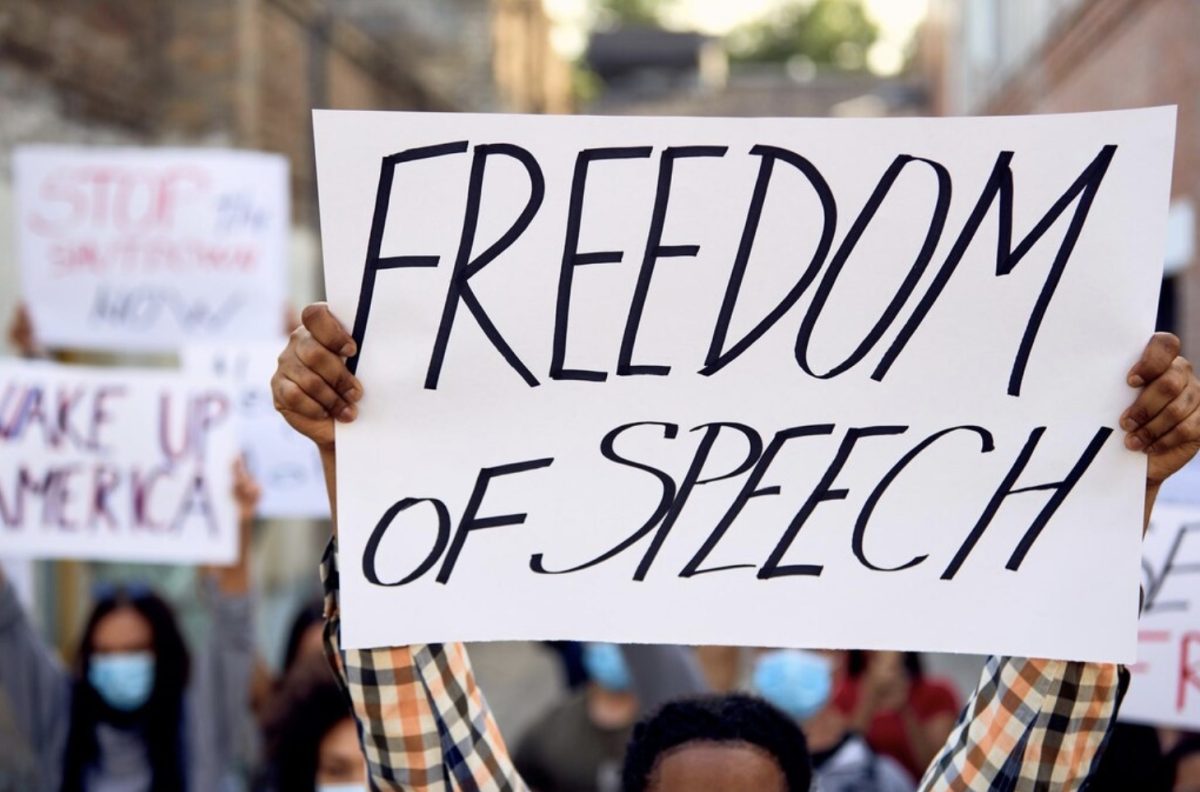





While freedom of speech has always been a pressing topic, the last couple months, Americans have felt controversy surrounding it has become more relevant due to visible censorship. There are many Americans that believe our right of speech is being actively challenged.
Jimmy Kimmel
In September, popular late night show host Jimmy Kimmel, nearly suffered a show cancellation after he had made comments about Charlie Kirk, a right wing-activist who was recently shot and killed during one of his debates at a college campus. Kimmel was initially faced with a cancellation though, in the end, he only received a suspension that lasted about a week.
On September 16th, 2025, Jimmy Kimmel stated during his late night show, “The MAGA gang is desperately trying to characterize this kid who murdered Charlie Kirk as anything other than one of them and doing everything they can to score political points from it.” He also accused this group of “working very hard to capitalize on the murder”.
Jimmy Kimmel’s comments elicited many different responses. Some people believed he was correct in his statements- and felt it was necessary that he spoke up. However, a lot of Americans, including the President himself, thought his remarks were ill timed and objectively wrong. This negative feedback and discourse led to ABC and the Walt Disney Company suspending his show. Disney came out with a statement claiming that Kimmel’s show had been pulled off the air to avoid tensions during an “emotional moment for our country.” Later on they added, “We have spent the last days having thoughtful conversations with Jimmy, and after those conversations, we reached the decision to return the show on Tuesday.”
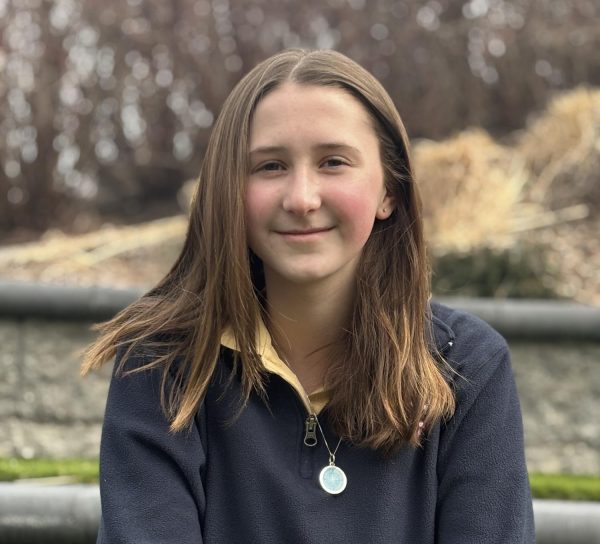
When asked about Jimmy Kimmel’s suspension and the recent discourse on free speech, Ellie Kennedy, a sophomore at Central Catholic stated, “Freedom of speech is our God-given right. If we have no freedom over what we are allowed to say, we have no freedom at all.”
It’s also important to note that there’s a lot of controversy surrounding Disney because of why they suspended Jimmy Kimmel. After the comment was made by Kimmel, Brendan Carr, the chair of the FCC spoke on a podcast and expressed his outrage for the comment. “We can do this the easy way or the hard way,” as well as “These companies can find ways to change conduct to take action on Kimmel or, you know, there’s going to be additional work for the FCC ahead.” These remarks were described as a bullying tactic that some believe blatantly violates free speech.
When Ms. Reardon, an English teacher at Central Catholic, was asked if she believed this was a violation of free speech and first amendment rights, she responded, “That is a violation of first amendment rights, specifically because it was a government entity putting pressure on [Disney], it wasn’t the consumers.”
Disney’s suspension, and later on, resumption of Kimmel’s show, elicited even more criticism. Plenty of Americans have expressed their discomfort in Kimmel almost being fired due to what he said. Some have even gone as far as to say that our free speech, something that America prides itself on, is being disregarded. Many also believe that this was an act of censorship. This event has sparked many debates. Americans have been left wondering, was this an attack on free speech? Was this pressure campaign illegal?
Firings
Similar to what had happened to Jimmy Kimmel, there have been numerous cases of people being reprimanded for discussing Charlie Kirk’s death. There have been several cases of teachers, students, talk show hosts, etc, losing their jobs or education due to comments about the situation. There were even some organized groups of people scanning the internet for people making controversial comments about Charlie Kirk.
MSNBC fired Mathew John Dowd, a political commentator at the news station after he made a comment about Charlie Kirk’s assasination. The remark in question was, “I always go back to, hateful thoughts lead to hateful words, which then lead to hateful actions.” Many, including the station, thought these remarks promoted a hateful atmosphere and were inappropriate.
Many former employees are outraged and have sued their former employers, but according to Cronkite News, the government has no jurisdiction in private companies. Companies like MSNBC are private; therefore, Dowd and others have no grounds to sue to protect their speech.
According to The Hill, Kevin Courtwright, a landscape supervisor at Auburn University was fired from his job after making comments about Charlie Kirk on Facebook. Courtwright wrote, “One fascist down; a whole socio-political movement to go. FAFO nazi trash.” Courtwright was encouraged to take down his post by an Auburn official, which he did, yet that didn’t stop the school from firing him.
Courtwright is outraged, and has filed a lawsuit against the school. Which, as discussed earlier, he has the right to do because his former place of work was a public school.
However, Courtwright’s situation raises a few questions. Should he have been fired for what he said? Did his statements cross the line of free speech and hate speech, and how can we tell the difference?
Free Speech vs Hate Speech
As important as free speech is, it’s not uncommon to see it be taken advantage of. Throughout American history, hate speech has been excused under the guise of free speech. Hate speech usually includes discrimination of another person due to ethnicity, religion, sexual orientation, and more. Hate speech can lead to targeted violence. Another article on hate speech was written by Thomas DiStefano and Kayla Khalil called “When Words Become Weapons: The Lasting Impact of Hate Speech”. Courtwright’s comments could be perceived as threatening, which could lead people to believe that it falls under hate speech.
When Mr. Shanahan, a History Teacher at Central Catholic High School, was asked if he thought hate speech could be seen as free speech. He stated, “I’m going to refer back to our Supreme Court, it is not up to me to decide what is free speech and what is hate speech,” and “as long as you’re not specifically threatening anybody, it’s free speech.”
The Media
The Media has a very big influence when it comes to opinions and ideas. Algorithms on social media can determine the kind of content people are consuming. Every type of media can be affected by censorship and the limitations of free speech.
When asked if Mr. Shanahan thought free speech has become controversial lately he responded that, “censorship has been much worse in the past,” including “the destruction of printing presses. Freedom of information has always been an issue”.
Shanahan’s reference to the printing presses goes back to the 15th century by Gutenberg. Censorship was perpetrated by the church due to the fear of unorthodox ideas being spread and self interpretation of religious texts. To counteract this, authorities created banned book lists to try to control what information was being digested at the time.
Despite our progress as a society regarding censorship, it feels as though the numbers of banned books are continuing to increase. Numerous pieces of literature that are taught in schools and are displayed in the library have been or are currently on the banned book list. Books can be banned for numerous reasons. Some of the more common ones are due to supposed elicit topics such as, racism, gender identity and sexuality, or sexual violence.
Regarding banned books, Ms. Reardon observed that “almost everything that I teach has been banned at one point and censored, and we see that coming a lot more with younger people and controlling what types of narratives you guys (as students) get.”
One example of how the Trump Administration is practicing censorship took place last October. During the current president’s presidential campaign, Trump filed a lawsuit against 60 minutes for $16 million, claiming they had deceptively edited an interview with Kamala Harris, his rival at the time. Trump stated they did this to “tip the scales in favour of the Democratic party.”
In the end, Paramount decided to settle the lawsuit. The $16 million will go to Trump’s future presidential library and plaintiffs fees, instead of going to him directly. This has been seen as yet another act of censorship targeting the media. One spokesperson for Trump’s legal team came out and said that the settlement was a “win for the American people over the fake news media”.
These are only a fraction of the examples of ways people have been censored and have practiced censorship.
The Pentagon
One of the most recent moves by Secretary of War Pete Hegseth has been about what the news has a right to report. Secretary Hegseth moved forward with a policy that all news stories relating to the Pentagon had to be approved by government officials in order to keep their press credentials. Starting on October 15th, any news outlet that wanted to report on such matters must sign a document with a slew of requirements and agreements if the outlet wanted to report on these matters.
The problem with this is that every story written about these subjects must be approved by the pentagon and they have the power to deny whether or not you can write about certain topics.
Some believe this is a violation of Americans’ right to a free press and is a fundamental aspect of the constitution. According to the Free Speech organization, a lot of news outlets have refused to sign this document, including outlets like Fox News that are right-leaning platforms. Other outlets include the New York Times, CNN, The Atlantic, as well as many other organizations.
Overall, freedom of speech has been a controversial topic for a long time. We as a society see violations of it every day. Mr. McCafferty, a Religion teacher here at Central Catholic, thoughtfully explained why free and sometimes uncomfortable speech is needed: “The Church would say that in all of our speech we need to treat others with kindness and as persons of absolute value — children of God. On the other hand, there are times when we may need to speak in ways that offend others in order to promote what is good and right.” It is important that we continue to recognize the value of our freedom of speech and how acts of censorship limit this freedom.