























Have you ever had a moment that felt like the end of the world, only to look back later and realize it was something small? For example, failing a test and convincing yourself your future was ruined, or getting left unread and replaying it in your head for hours. At the moment, it feels massive, but later it barely matters. Also, why does that often happen during your teenage years?
Why do small things feel so big when you’re a teenager?
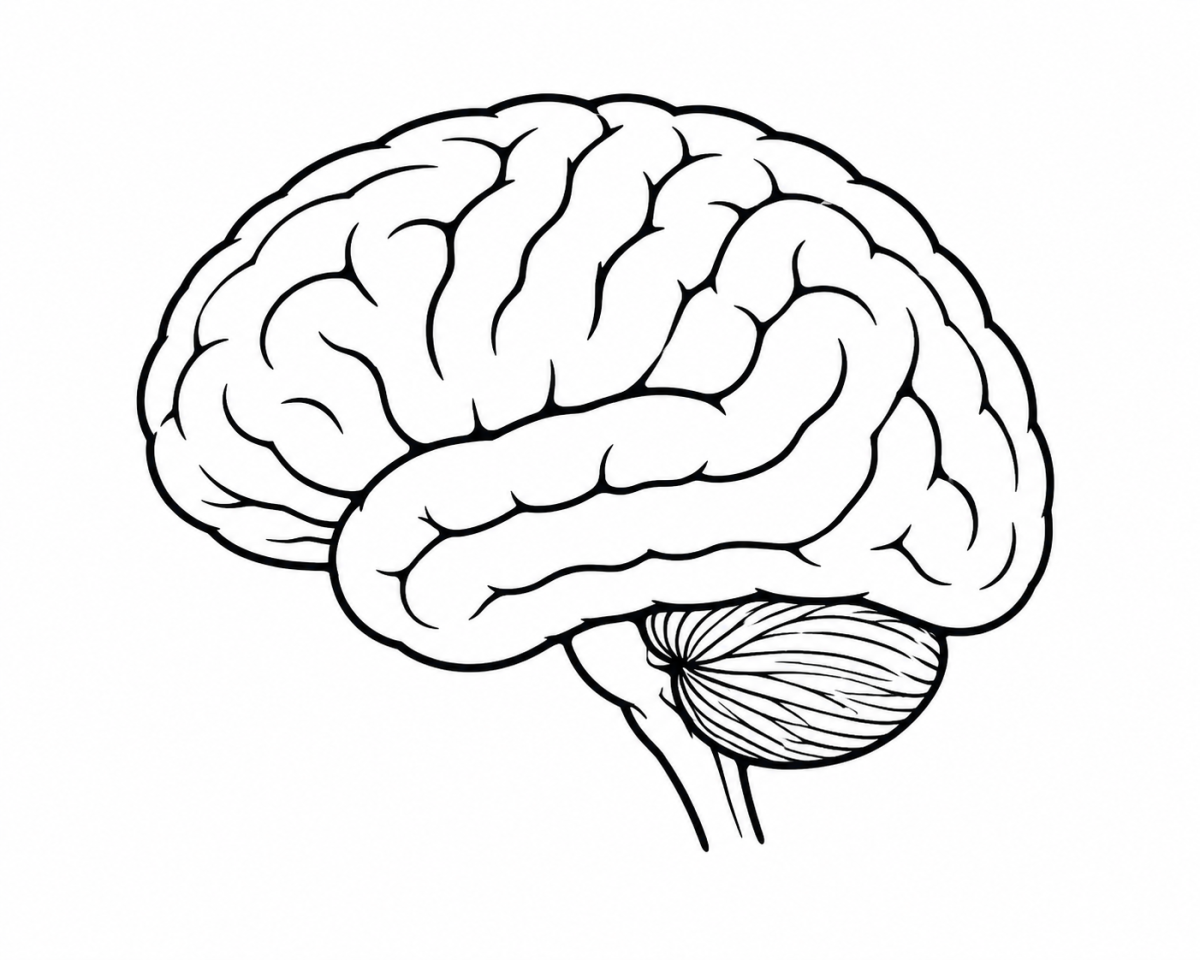
One idea is that teenagers’ “huge emotions” are not just teens being dramatic, rather these emotional reactions are actually related to brain development. The part of the teenage brain that controls emotions is the emotional center, the amygdala, which is a very active part of the brain.
In addition, the decision-making part of the brain, the prefrontal cortex, is not fully developed until around age 25. These two parts of the brain working together while “under construction” cause emotions to feel stronger and make them harder to regulate. Teenagers do not just act more emotional, their brains are directly wired to experience emotions more intensely due to ongoing growth and development.
Brain Development: the prefrontal cortex
Adolescence is a critical time for brain development, and the prefrontal cortex is one of the last areas to fully mature. This part of the brain is responsible for skills such as planning, prioritizing, controlling impulses, and making decisions.
During adolescence, Myelination (the process of insulating axons in the brain and spinal cord) and Synaptic pruning (the brain’s way of eliminating weak or unused neural connections, similar to pruning bushes) occur in the prefrontal cortex.
These processes increase the efficiency of information processing and strengthen connections between the prefrontal cortex and other parts of the brain. This is what contributes to overall brain maturity and development.
You might experience this in everyday situations like when you’re fighting an urge to send an angry text or making impulsive decisions when you’re with your friends. As the brain matures and teenagers become older, it becomes easier to slow down, think critically, and respond more calmly.
Overall, the teenage brain is constantly developing, which is why emotions can feel more intense during adolescence.
The “Science” Behind Teenage Emotions
Teenagers deal with stress from school, social situations, social media, and anxiety about the future. All of these factors combine and influence how teenagers experience and express emotions.
According to the National Institute of Mental Health, “Changes to the areas of the brain responsible for social processes can lead teens to focus more on peer relationships and social experiences. The emphasis on peer relationships, along with ongoing prefrontal cortex development, might lead teens to take more risks that could be negative or positive, such as talking to a new classmate or joining a new club.”
Many might have experienced this when they found out that they’re being left out of a group chat, not getting invited to plans over the weekend, or worrying about what classmates think suddenly felt extremely important. The teenage brain is highly focused on social relationships so these situations can feel more intense than they may later.
This highlights how brain development directly shapes how teens respond to social situations and emotional stress.
The National Institute of Mental Health also explains that teen brains respond differently to stress and social situations because of the major changes happening during adolescence. Furthermore, according to the National Library of Medicine, “many mental disorders first appear during adolescence due to rapid brain development, hormonal changes, and increased stress.”
Teenagers often feel anxious due to rapid brain development combined with stressors like school, sports, and lack of sleep, which makes it hard to process emotions sometimes.
Why the “End of the World” feeling?
There are four major factors that help explain why emotional situations can feel so intense or “like the end of the world” during the teenage years.
Factor 1: Hormonal changes
The Newport Academy explains how hormones play a major role in teenage emotions. During adolescence, the body goes through hormonal changes, including increases in hormones like estrogen and testosterone.
These hormonal shifts can affect mood, making emotions feel stronger and sometimes unpredictable. Teenagers may feel extremely happy one moment and then frustrated or upset the next. When these changes combine with an already highly active amygdala, emotional reactions can feel overwhelming.
Teenagers might experience this when something small, like losing your AirPods, spilling your water, or getting a rude text that you read into too much, ruined your entire mood for the day. Hormonal shifts can make emotional reactions feel much stronger than the situation itself.
Factor 2: Sleep
The National Sleep Foundation (NSF) states that sleep plays a major role in emotional regulation during the teenage years. Many teenagers do not get enough sleep due to school schedules, homework, sports, jobs, or time spent on their phones.
According to Psychology Today, teenagers need 8–10 hours of sleep to function properly, yet over 75% get less than eight hours.
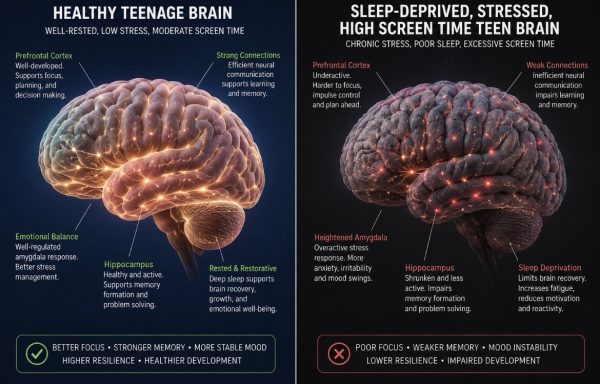
Lack of sleep affects the brain’s ability to think clearly and manage emotions. When the brain is tired, it becomes harder for the prefrontal cortex to function properly, which can lead to stronger emotional reactions and difficulty calming down.
After staying up late scrolling on your phone and then regretting it the next day, many teenagers feel irritated, emotional, or stressed over things that normally would not bother them as much. Furthermore, placing emphasis on how important sleep is for teenagers.
Factor 3: Social Media
Social media has a powerful impact on how teenagers perceive situations. Platforms that constantly show what others are doing can increase comparison and pressure to fit in.
Seeing friends hang out without you or comparing your life to others online can make situations feel much bigger than they actually are. Because teenagers are already more focused on relationships, social media can amplify feelings of rejection, jealousy, or anxiety.
An example of this may be when you see photos of friends hanging out without you which quickly can lead to overthinking, comparison, or feeling isolated, even if there was no intentional exclusion involved.
It is also important to recognize that these intense emotions are not entirely negative. Experiencing strong emotions can help teenagers build deeper connections, develop empathy, and learning more about themselves.
Teenage experiences are part of growing up and help build emotional intelligence over time. As the brain continues to develop into early adulthood, it becomes easier to manage emotions and put situations into perspective.
Factor 4: Identity formation
Lastly, one important but often overlooked factor is identity formation. Teenagers are actively figuring out who they are, which naturally makes experiences feel more personal and significant.
Even small events can feel defining because they are tied to self-image, belonging, and confidence. This is another reason why emotional reactions can feel so intense and everything feels more meaningful while a sense of identity is still developing.
You might have experienced this when criticized about your appearance, personality, or interests felt personal and hurtful. Especially with teenagers, we take these comments strongly because we’re still figuring out who we are and how we want others to see us.
In conclusion, small moments feel much bigger during the teenage years because of a combination of brain development, hormonal changes, sleep patterns, and social influences. The teenage brain is still learning how to balance emotion and logic, which makes everyday situations feel more intense. Understanding this helps explain why moments that once felt overwhelming often seem much smaller later in life.
Interview with Nurse Laura J Moloney, RN, MSN
Nurse Moloney was interviewed to give insight as a nurse who works with teenagers almost everyday at Tufts Hospital in Boston and is also a parent of three teenagers.
Why do teenagers tend to react more emotionally than adults?
“I think it’s because their emotions come on faster and stronger, sometimes almost out of their control because they’re still learning how to slow down and think before reacting and also they’re still developing skills to regulate their emotions, so it takes more effort for them to calm down compared to adults.”
Do teens sometimes react strongly in the moment but feel differently later?
“All the time. I see it a lot with my kids, something can feel huge in the moment, and then a few hours later they don’t even care about it anymore and they feel fine.”
What kinds of situations tend to feel overwhelming for teens, even if they seem small later?
“A lot of things like friend drama, feeling left out, seeing friends hang out without them on social media, grades, or even little small comments and those things can feel really big at the time, even though they might not matter much in the long run.”
How does lack of sleep affect teenagers emotionally?
“Well teens who don’t get enough sleep are usually more irritable, more emotional, and have a harder time handling stress in a healthy way. Even small things can set them off so sleep is really important, it’s one of the things we ask at my hospital to teenagers, do you get enough sleep because it’s especially important for them it directly affects mood, patience, and decision-making.”
Have you noticed any changes in teen mental health over time?
“There does seem to be more stress and anxiety now than in the past, especially since COVID, when everyone was a little on edge.”
In the end, Laura Moloney’s insights help reinforce the idea that teenagers are not simply “overreacting,” but are experiencing emotions in a way that is deeply influenced by brain development, environment, and pressures. What may seem small from the outside can feel overwhelming in the moment because of how the teenage brain is wired and still developing. However, these intense experiences are also an important part of growth, over time, the brain matures and emotional regulation improves, it becomes easier to put situations into perspective. This is why moments that once felt like the end of the world often turn into lessons rather than lasting problems. Understanding this not only helps explain teenage behavior, but also encourages more patience and empathy for what teens are going through.