























Illegal immigration to the United States has been a highly debated and extremely topic sensitive subject for many years.Many people argue that illegal immigration undermines the rule of law, undercuts legal immigration, and contributes to untenable growth in population, which negatively impacts the environment.However, on the flip side, others say many undocumented immigrants contribute to the economy positively, and since the U.S. is a nation made up of immigrants, shouldn’t the country be welcoming to immigrants?
Over the years, illegal immigration has been addressed in many different ways, but recently, many have been upset by the inhumane way the Trump Administration and ICE have been treating undocumented immigrants. Additionally, President Trump has made it even more difficult to become a U.S. citizen, has ended birthright citizenship, and has blocked asylum seekers from entering the United States.
Trump’s changes have been met with overwhelming approval from the Republican Party, while the Democratic Party strongly disapproves of the president’s immigration policy.With the country divided over this issue, it’s important to fully educate oneself before forming an opinion, and in order to do that, taking a look back at the history of immigration policies is imperative.
Immigration Laws of the 1700’s-1800’s

The first law that specified who could become an immigrant was passed in 1790, referred to as the 1790 Naturalization Act. This law excluded people of color from naturalizing and changed the requirements for naturalization to being a resident of the United States for two years, a free white person, and of honorable character.
Since the Naturalization Act was passed, many other laws have been passed, further changing the requirements for naturalization, and putting restrictions on immigration. These changes have included how long a person has to live in the United States to naturalize, and what races are allowed to naturalize.
A notable change to America’s naturalization policy is the extending of citizenship to those of African origin in 1870.
Over the years, many different restrictions on immigration have been enacted for varying reasons. In 1875, the United States banned people with contagious diseases, anarchists, beggars, criminals, importers of prostitutes, and polygamists from immigrating to America.
Other restrictions have been racially motivated, due to the growing number of Asian immigrants. At one point, the U.S. banned immigration from most Asian countries.
Immigration Laws of the 1900’s
America’s predominant immigration flow had moved from western and northern European countries to eastern and southern European countries by the beginning of the 1900’s. Because of this, laws were passed in both 1921 and 1924 to try to cap the total annual immigration, and numerical quotas were imposed on immigrants based on their nationalities, favoring those from western and northern European nations.
Mr. Lynch, a history teacher at Central Catholic, described these quotas as being “overtly racist,” as they were “specifically designed to favor northern and western immigration”. He also found it ironic that “the people doing that favoring – the people in charge – are the ones who fifty to eighty years before were the ones being discriminated against”.
In 1943, a law was passed that allowed a limited number of Chinese to immigrate, which caused the crumbling of long-established immigration restrictions. Nine years later, the United States passed a law allowing a limited number of visas for other Asians, and race ended up being removed as grounds for immigration and naturalization.
Years later, the Immigration and Nationality Act was passed in 1965. This law created a new immigration system, with a focus on family reunification and skilled immigrants, rather than nation quotas. However, this act also imposed the first ever limits on immigration from the Western Hemisphere, and as a result, immigration has been dominated by people from Asia and Latin America, rather than from Europe.
Many laws regarding refugees have been passed since 1965, with the most notable being passed in the 1970s and 1990. Laws passed in the 1970s allowed the entrance of Indochinese refugees fleeing war violence, and included relief for immigrants from Haiti, China, and Nicaragua. The law passed in 1990 established the “temporary protective status”, which has saved immigrants, mainly those from Central America, from being deported to nations in the middle of armed conflicts, natural disasters, or other unsafe conditions.
The Immigration Reform and Control Act, which granted legalization to millions of unauthorized immigrants, mostly from Latin America, who met certain conditions, was enacted by Congress in 1986. This law also placed sanctions on employers who hired undocumented immigrants.
Central Catholic history teacher Mr. Lynch said that this act was “an important law at the time because it enabled people to settle their citizenship, continue to be productive members of society, continue to be hardworking members – they already are – but continue to be hardworking members of society, and fully integrate into the society, you know, into our country”.
Further laws regarding concerns about unauthorized immigration and terrorism were passed in 1996, 2002, and 2006. These laws put an emphasis on prioritized enforcement of laws, tightened admissions eligibility, and border control.
Presidential Administrations’ Approaches
Two presidents who have focused a lot of attention on immigration recently have been Barack Obama (2009-2017) and Donald Trump (2017-2021, 2025- ). These two leaders have taken very different approaches to immigration policy, and the country’s opinions are split as to whose method is better.
The Obama Administration
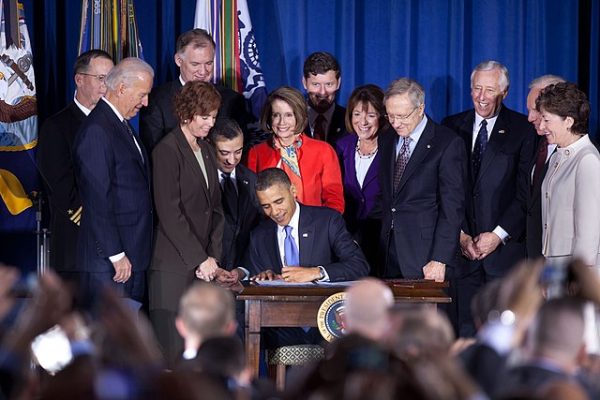
President Obama both welcomed new immigrants into the country, and deported many undocumented immigrants. Under Obama’s presidency, the annual deportation number spiked, hitting a record number of 409,849 in fiscal 2012. Pro-immigrant groups dubbed Obama the “deporter-in-chief” because of his enforcement of immigration laws.
However, President Obama also introduced several new measures to make it easier for an illegal immigrant to live and prosper in the United States.
The Deferred Action for Childhood Arrivals (DACA) policy was signed into law in 2012, and it allowed undocumented immigrants who had come to America as children to apply for inexhaustible two-year periods of deferred action from deportation. This policy allowed these individuals to remain in the United States, and made them eligible for work permits. However, this policy did not provide a track to citizenship for its registerers.
In 2014, the Deferred Action for Parents of Americans and Lawful Permanent Residents (DAPA) program was introduced, and, similar to DACA, it too provided work permits and renewable deferred action status, but this time, for illegal individuals who have children that are U.S. citizens or lawful permanent residents. State governments put forward several lawsuits, which led to the blocking of DAPA’s enforcement in 2015.
The International Entrepreneur Rule was proposed in 2016 by the Obama administration, and its purpose was to help foreign born businessmen remain in the United States as they grow their companies. “Start-up visas” were introduced in order to encourage enterprisers from foreign countries to come to America to start expanding their businesses.
All in all, President Obama did deport a lot of unauthorized immigrants from America during his time in office, but he also introduced many policies in order to make it easier for immigrants to come to the United States, build a life, and thrive.
The Trump Administration
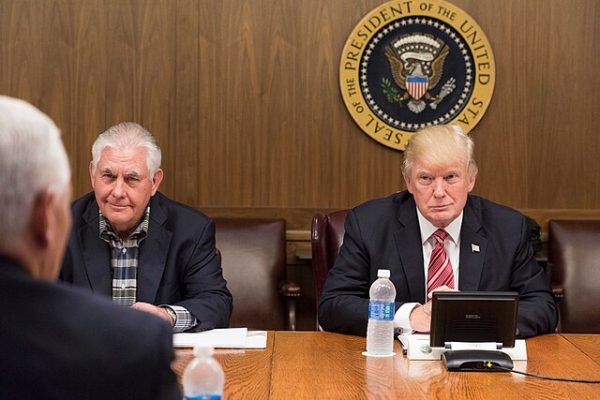
In his second term, President Trump has taken a very harsh approach to immigration policy. Some of the most dramatic changes has made include ending birthright citizenship for children born to parents who aren’t full-fledged American citizens, suspending most refugee admissions to the United States, and blocking asylum seekers from entering the United States.
President Trump issued Executive Order 14160 called “Protecting the Meaning and Value of American Citizenship”, which reviews the Fourteenth Amendment right to birthright citizenship. This executive order claims that this amendment does not grant citizenship to all who are born in America, but only those who are subject to its authority.
It also adds that in order for a child to earn birthright citizenship, at least one parent must be a citizen or lawful permanent resident at the time of birth. Furthermore, this order directed government agencies to stop providing citizenship documents to individuals who do not meet the aforementioned requirements.
However, this executive order has been met with a lot of pushback, with nine lawsuits filed against this order on constitutional grounds, and with two federal judges issuing preliminary rulings blocking its execution nationwide (as of February 2025).
President Trump signed Executive Order 14163 titled “Realigning the United States Refugee Admissions Program” which proclaimed that the arrival of new refugees would be very harmful to America. Because of this statement, it suspends the entry of any and all new refugees under the current Refugee Admissions Program for 90 days, meaning that no current applications under the program can be denied or accepted.
In the interim, according to this order, few exceptions will be made to admit certain refugees who are deemed as not a threat or those whose admission is in the best interest of the country.The Secretary of State and the Secretary of Homeland Security will report to President Trump every ninety days regarding the program, and this will continue until he decides to resume the program.
President Trump reinstated a policy called Migrant Protection Protocols (MPP) (also known as “Remain in Mexico”) that was put into effect during his first term in office. This policy states that all seekers of asylum who arrive at America’s southern border must stay in or return to Mexico while they wait for their acceptance or court removal proceedings, depending on whether or not they have already entered America illegally. To put it simply, this means that during this waiting period, asylum seekers cannot come into or stay in the U.S.
This executive order also got rid of the “CBP One” mobile app. U.S. Customs and Border protection created this app in order to allow migrants to secure immigration appointments, like inspection appointments, and asylum application appointments. When the app was discontinued, migrants who had already scheduled appointments through the app found that their appointments were canceled.Apparently, this app was terminated to stop migrants, who without the app would be inadmissible, from using this app to help them enter the United States.
Similar to Obama, Trump has also been very strict with deportations, but he has taken a completely different approach to it. Recently, Trump has been facing a lot of backlash due to the inhumane way that ICE has been capturing, treating, and deporting illegal immigrants. Very early on in Trump’s second term, Benjamine Huffman, the acting Homeland Security Secretary, announced that ICE would be deporting individuals who had been admitted into the United States temporarily under the Biden administration. Trump also deployed the U.S. military to assist ICE in multiple states.
The Trump administration has deported many suspected illegal immigrants quickly, with limited or without due process, using the Alien Enemies Act, which gives the president the authority to relocate, arrest, or deport any male over the age of 14 who originated in an enemy foreign country. These supposed illegal immigrants were imprisoned in El Salvador. Several American citizens ended up being detained and deported.
The current administration has also been setting daily goals for ICE arrests, and have also campaigned to increase the visibility of ICE’s arrests, an idea that has faced a lot of backlash.During this period of time, many people have stated that ICE targeted people who looked Hispanic. Not only that, but several federal courts have found ICE to be engaged in racial profiling.
The conditions that Trump and his administration have been subjecting these illegal immigrants to can be described as cruel, inhumane, and repulsive. There have been reports that people detained by ICE have been deprived of water, food, and showers. Several people have died in ICE custody since the beginning of Trump’s second term in office.
Known as the worst of ICE’s detention facilities, “Alligator Alcatraz” in Florida has been described by The Guardian as being involved in “a succession of alleged abuses at jails operated by Immigration and Customs Enforcement Agency (ICE) in the state since January, chronicled by the advocacy groups Human Rights Watch, Americans for Immigrant Justice, and Sanctuary of of the South from interviews with detainees”.
President Trump’s One Big Beautiful Bill Act, which contains the core tax and spending policies that will define Trump’s second presidential term, was signed into law on July 4th, 2025. Within this bill, the U.S. government granted unparalleled funding to ICE to pay for deportation operations, additional funds to hire new agents, and detention facilities. This enlarged ICE funding is anticipated to lead to restricted access to asylum, mass detentions and deportations, and expected humanitarian and economic consequences.No federal law enforcement agency has ever received this much funding in U.S. history, and ICE’s funding is more than the funding for the federal prison system.
Many protests have been put on nationwide against ICE’s brutal methods, the most prolific being the June 2025 Los Angeles protests, which was caused by a series of ICE raids across the city and surrounding areas. These protests included conflicts between law enforcement and civilians, and caused the deployment of the National Guard and the Marines against their own people.
In polls taken around July 2025, it is shown that a majority of U.S. citizens disapprove of ICE. However, public opinion on the matter seems to have shifted, because by late August, Pew Research Center shared that its polls have become increasingly divided concerning views on ICE, with 78% of Democratic Party supporters viewing ICE negatively, and 72% of Republican Party supporters viewing ICE positively.There have also been at least three notable attacks against ICE facilities in Texas in 2025 in retaliation to their cruel methods.
Take Aways: Treat Immigrants with Respect
Ms. Ciccolo, another history teacher at Central, believes that there hasn’t been real change in America’s immigration policy in the past few decades. Ms. Ciccolo thinks that “Republicans and Democrats want to play to their base a little bit, and so instead of trying to solve the problem, they just try to cater to the people that will agree with them, so [she] think[s] both sides [and both] Republican and Democratic presidents have both played politics with the issue, and [she] think[s] that’s really hurt us as a nation”.
When asked about the current administrations immigration policy, was not sure whether the policy “is going to solve the problem of new immigration, or create a path forward for people who are seeking asylum and wishing to become U.S. citizens”.
Both Mr. Lynch and Ms. Ciccolo believe that immigrants, regardless of whether or not they are legal, are equally deserving of respect as every other human. Mr. Lynch thinks that “we should treat people with dignity and respect as human beings.” Ms. Ciccolo agrees with Mr. Lynch, but also stated that “some of what we’re seeing right now is very scary and dangerous, and there is a fine line between constitutional and unconstitutional” policies.
Immigration in the United States has been a highly debated issue for years, with many arguing that this nation has been built on the backs of immigrants, while others argue that immigrants are a danger to the country. However, I think that it is agreed upon by everyone that all humans, no matter what they look like or where they come from, are equally deserving of dignity and respect. It is up to our country’s legislation to decide how immigrants should be treated so that their dignity is preserved.