







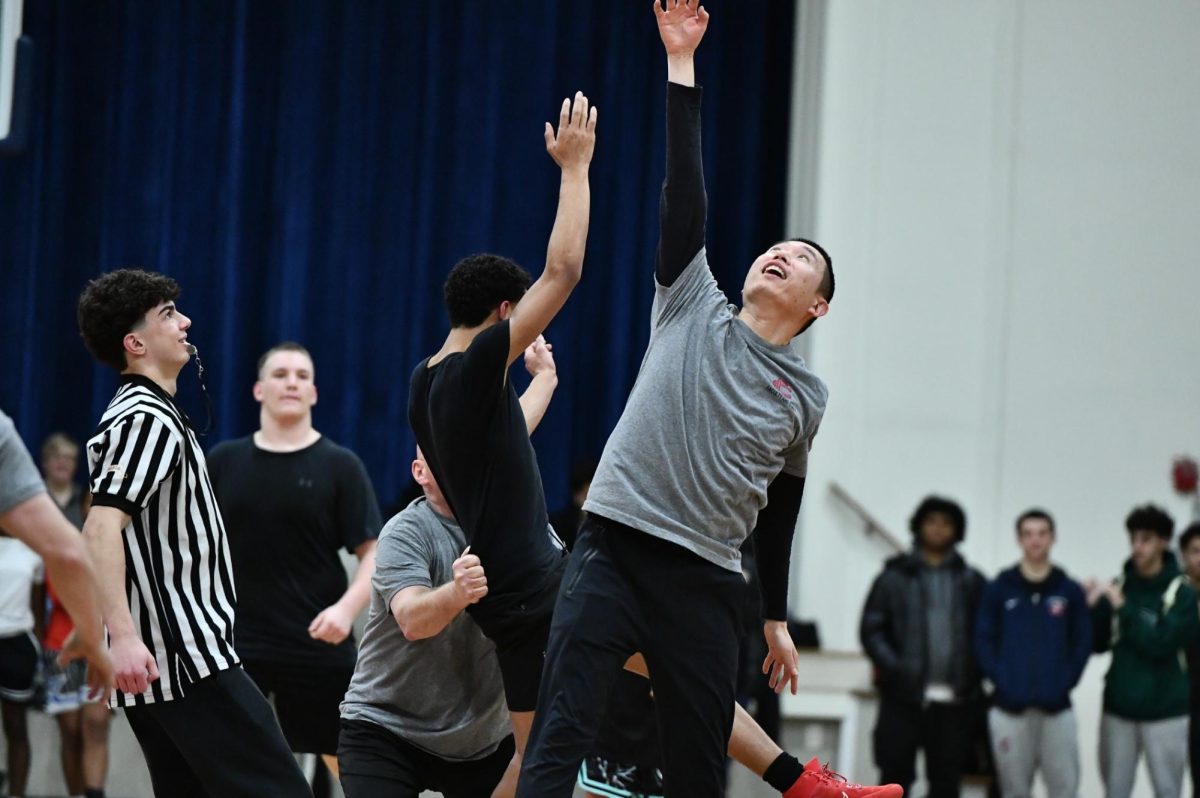
















Every move. Every little slip. Everything matters. The moments that mean the most are the moments where the struggles emerge. With every breath taken is a suffocating thought curating in the mind:
“How good could I be?”
“How much will it take from me?”
These questions are asked, but left unanswered in the athlete’s mind. Thoughts that exist but go unrecognized. Every athlete struggles with an internal battle, whether it is the final moments before a game-winning goal or the tense reality of the starting line, a player’s mind determines everything. Like a game of chess, their moves are scattered across the board, and every decision matters. Yet, the world only watches the physical pieces move, blind to the mental toll behind them. For athletes, is that final checkmate ever really a win?
In order to get a closer look in the athlete’s mind, I interviewed 5 athletes here at Central Catholic representing Girls Lacrosse, Boys Soccer, Boys Basketball, Gymnastics, and Track and Field. Here are their insights:
Do you think that mental struggles can take away from the love of your sport?
“It’s easier for people to be hard on themselves and blame themselves for little things they could have done better. Blaming yourself makes it a lot harder to love the sport, and then makes you feel like your teammates don’t like you, and coaches don’t like you. It makes you feel like you are not good at your sport. It makes you just not want to do it anymore.” Lili Damello ‘29 – Girls Lacrosse
“When your mental health is in a bad state, you don’t perform very well. You start getting frustrated. This affects a lot of gymnasts and their love for the sport, and how they perform.” Micheala Kendig ‘29 – Gymnastics
“I think if you’re in a bad mental state it can make you think that you lost your love for your sport. When you feel sad or depressed, you can feel clouded with sadness or grief in a way where you won’t see the good things in your life. You can be blinded from ways you feel or used to feel.” – Benjamin Hebert ‘29 – Boys Soccer
“I mean, it’s a lot. Sometimes I downplay myself. I don’t know, I get the ball and I might miss this shot and we need this shot, if I pass to the wrong teammate, they might miss the shot. If I make a bad pass the other team might get a turnover, you know? So there is a lot that goes through your mind, sometimes making it only about not messing up.” – Enrique Martinez ‘29.
The sport is more than just about playing well, it’s about feeling confident whilst playing. Wins feel great, but that doesn’t make the heftiness of losses any less. A weight is continuously on the athlete, with the world pushing down on them until they eventually they give out. Nobody notices how much an athlete carries until it is dropped on their feet, consideration for the athlete is never shown. Instead, people typically tend to just keep adding weight plates. As a result, the love of the sport begins to die, the passion begins to dim, and the athlete is worn down. Yet, nobody notices until the word “quit” comes out their mouth and only then it is a big deal.
There is not always going to be a solution, but there is a positive force that seemingly pushes an athlete to keep going. A team. Although many sports can be seen as isolated, it doesn’t take away from the light a team can bring.
What does a team provide in the moments where you feel the sense to quit?
“I think about it all the time. Just kind of quitting my sport. I feel the best way to prevent this is if you have friends on the team. You can kind of just talk to them about it” – Lili Damello ‘29
“I’ve been with my team for my whole life. So I’ve known these girls for so long, and everyone’s so supportive of each other, we’re always rooting for each other and cheering each other on, and that always gives everybody a boost of motivation and happiness, and it makes everybody feel like they can do what they can do. It makes everybody so happy. I think that’s a big thing in gymnastics, lifting each other up so that we aren’t being hard on ourselves and being unmotivated.“ – Michaela Kendig ‘29
Athletes are upheld by the support their team brings. They strive with someone holding them up or pushing them when they fall. It is important for an athlete to experience this from more than just their team. They deserve to be supported and recognized, rather than hidden behind the shadows of their sport.
It is often misconceived that we are the sole control of the outcome of our performances. If someone runs slow— practice more. If someone doesn’t hit their skill—practice more. If someone doesn’t shoot the ball in the net —practice more. That seems to always be the standard athletes are put under. Yet there is so much more that goes into it. How people see it versus the reality of it are completely differentiated. Young athletes across Central Catholic all have a different story to tell, yet share the same subtle message from very similar experiences.
What do you think is the most overlooked in your sport, and do you wish that people could see this?
“With any sport, the mental states are overlooked. Really anyone could be struggling in sports since it’s kind of hard to see. They’re just performing, it looks like they’re trying their best, but it could be really hard for them to be doing their best.” – Lili Damello ‘29 – Girls Lacrosse
The lens we see a singular performance through is never fully clear. It could be hard for someone to do their best, yet it is all that people stick to. Many judge the athletes’ efforts, without even knowing what goes into those efforts.
“Not doing things properly or having, a rough day. I think it definitely is overlooked by the media. I think if people saw what gymnasts really go through, they would definitely be able to understand how much mental capacity and how much strength it takes to do gymnastics. Many people just overlook gymnastics as another sport, but I think it’s very tough and hard to do mentally.” – Michela Kendig ‘29 – Girls Gymnastics
For a world like gymnastics, every mistake matters, but this does not mean that these will not occur. Gymnasts are faced with the idea that they need to be perfect. As a gymnast of 9 years describes— sometimes this is not always the case. Just like humans, gymnasts struggle. They are not any different, nor are there mishaps to be looked down upon. Yet they are.
“They just assume that you go out there and run, and then it’s over, but there’s so much preparation we have to do. It’s just, there’s so much. In order to be able to push yourself mentally. It’s definitely like there’s other people cheering you on, but you also need to cheer yourself on.” – Amanda Lagimonier ‘29 – Girls Track & Field
Even in a race that lasts a few seconds, every stride, every arm pump, and leg drive is observed. Every single move is critiqued. It is easy to focus on the runner, but in reality, the focus is never truly on the runner; it is simply on how they run.
“I think at the end of the day athletes are just humans like anyone else who also struggle. You never know what someone may be going through especially in a society that has projected people to be weak or less than for seeking help. I think their sport only makes that weight heavier as there is enormous amounts of pressure to perform well for their team, family, and fans. I think it is extremely unrealistic to expect an athlete to do what they do and have no mental toll whatsoever.” – Benjamin Hebert ‘29 – Boys Soccer.
Mental health has a role, and the inner workings of an athlete’s mind should not be diminished to focus solely on performance. No matter the sport, the player, or the competition level—mental health in athletics will always matter. A message written by athletes, that needs to be sent to the world.