





















The world has been in an ongoing debate regarding what counts as a sport, and this has been seen recently with the entrance of breaking or break dancing in the 2024 Olympics. To some individuals, being able to call yourself an “athlete” depends on what sport you do. Debate swirls around whether activities such as dance, archery, horseback riding, cheerleading, and even gymnastics qualify as a sport or are simply just a hobby. This article includes criteria for determining whether an activity should be considered a sport and which sports live up to these standards.
What is a Sport?
According to the Western Gazette, written by a sports intern, all sports need to fall under three different categories: “physical exertion or skill, competition between players or teams, and a defined set of rules that the competition has to follow.” These “necessities” are lenient depending on the person. From a more factual point of view, Britannica states that sports are “physical contests pursued for the goals and challenges they entail.” It is very common for dancers or cheerleaders to consider their activity a sport becsause it fits this Britannica definition as dance or cheer. However, individual players hold their own opinion on the topic, therefore, it is difficult to create a set definition of a “sport”. This loose definition leaves room for questions and reasoning regarding the “level of exertion” and what type of exercise or competition should be considered sport.
Debatable Athletics
Many activities are not considered sports, but are instead merely seen as hobbies or even art. The list of these activities can go on forever, depending on your own preferences. Some of these activities include, dance, gymnastics, horseback riding, and cheerleading. There are many questions to consider along the way: Why is it not a sport? Does it fit in all three categories?
Dance
For those who argue that dance is not a sport, they have the common idea of it being a performance. By performance, it
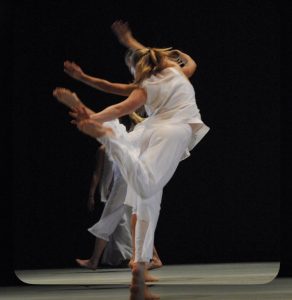
is not the score or execution, but more the artistic skill of portraying a story that matters. The history behind dance backs up the side of the argument that categorizes it as an art form. It originated as a pastime, an act that the wealthy took part in simply for one. According to Pirkko Markula from the University of Alberta, “If the sport philosophers hesitated to assign aesthetic sports as art, several dance scholars have traced how art has been transformed into sport through the development of ballroom dance.” As decades went on, dance progressed into different genres and levels. However, this could also be an example of dance being a sport. Many believe that dance is only a sport if it is competitive. This is where the three categories come into play. Competitive dancers are known to be in the studio for five or more hours a week. During these practices, they do workouts, training, and physical activity in their dance numbers. Each competition has regulations regarding the dancers’ hours in the studio and the length of the dances. It turns out to be highly rewarding when winning a crown at a national competition. Even though dance can be considered both a sport and an art, it began as an art form, not a sport.
Gymnastics
Even though gymnastics is a part of the Olympics, plenty of people still consider it just an activity. Since gymnastics is a
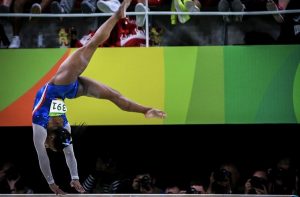
year round practice, many people consider it a form of “art” due to it not being a seasonal sport. As for the categories, it is argued that it does not fulfill the category of competitions with a clear winner. According to Brad Oremland writing for Sports Central ,”the competition [in gymnastics] is totally artificial. You take something beautiful and try to quantify or rank it. It’s like judging yoga or grading painters.”However, the score system can also be taken into account on the other side of the argument. Due to the consistent judging of set regulations, it continues to fit some of the requirements for a sport. Gymnasts undergo hours of practice to improve strength, flexibility, and coordination. These practices fall definitely constitute“physical exertion.”
Horseback Riding
Dressage is a form of horseback riding that is mainly known for its part in the
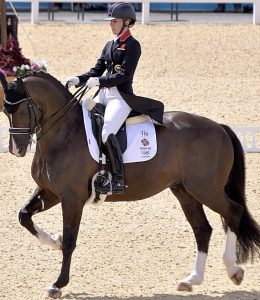
Olympics, however, this faces the popular complaint that “the horse does all the work,” meaning that the rider is not really an athlete. If you watch the sport, it is clear to the eye that the horse is the one running, executing the action of physical exertion. Others argue that the horse would not know what to do without the rider. Elle Athens, writing for Medium, explains that, “Horses need guides as ships need captains,” and that “it takes a skilled captain to pull his ship and crew through a rogue wave just as it takes a skilled rider to pilot a horse when the motivations of horse and rider don’t agree.” While the type of exercise a rider goes through is not about flexibility or running, it involves leg muscle and control, a firm hand to guide the horse, and a strong core to hold the rider up on the horse. Without these types of training, a rider would easily fall off the horse. Due to the the rider’s contribution to physical exertion in the competition is “borderline,” horseback riding continues to fall safely under both categories.
Cheerleading

Cheerleading has been a long debated as to whether it counts as a sport itself or is simply an entertaining activity. Sports are described by ESPN as groups that
“exist to compete, not perform and entertain or support another group,” and cheerleading is often argued to be a performance, not a competitive sport. However, cheerleaders are still called athletes for their athletic skill. During cheer competitions, the athletes engage in movement, strength, and timing. They end with receiving scores of third place, second place, and first place, a common grading system used in multiple sports and arts. While cheer undergoes physical strength, competition, and rules to follow regarding uniform and critiques, many people reject it as a sport.
The Final Debate
All these activities can be considered sports or merely activities. Describing both sides of the argument opens the debate for everyone. What do you think, what makes an activity a sport?