























We all know what an upset is. In the world of sports, it is when a team wins against another that is believed to be superior. Most of the time, we think of an upset in this setting, sports, but some of the most important times in history have been upsets. As history dictates, in order to have an upset, the weaker group must have a strong strategic mind behind them.
This article will go over the top 5 strongest strategic minds in history, in my opinion. While there is no definitive top 5, I have made my picks in this list based on factual information. This list is not intended to offend anyone.
Honorable Mention – Timur the Great
Timur the Great is our honorable mention for this list and should be a clear showing of how strong the greatest minds are strategically.
Timur grew up as part of the Turkicized Barlas tribe. In the 1360s, he took control of the tribe. Over the course of his conquests, Timur would conquer Persia, parts of India, most of Anatolia, the Fertile Crescent and The Levant, most of Central Asia, and Egypt. It is impossible to overstate his strategic genius. He brought his country from a small and weak tribe, to the most powerful empire in the world at the time, known for its unchallenged military might. Along with this, he wouldn’t lose a single battle in his 44 years of conquest.
Overall, Timur the Great was certainly among the greatest strategic minds in history. Despite this, he is placed as our honorable mention for one reason alone: the sheer strength of the others on this list. While Timur was an excellent strategic mind, the others on the list are more impressive, and Timur falls just short of top 5.
Fifth Place – Hannibal Barca
Anyone who has ever studied Rome certainly knows his name; Hannibal Barca. His father, Hamilcar Barca, was a Carthaginian general during the First Punic War. He was an incredible strategic mind and kept the war going years longer than it would have gone on otherwise.
Hannibal had been imbued with his father’s hatred of Rome. At a young age, he accompanied his father into battle as the Carthaginian Empire sought to conquer Spain. His father would eventually die, giving him the chance to take his vengeance against Rome.
During the Second Punic War, Hannibal led his army across the Alps, catching Rome completely off-guard. Battle, after battle, after battle, he dominated the Romans. He turned Rome’s allies in the peninsula against the Romans and crushed them. His masterpiece was The Battle of Cannae. At Cannae, his force of 50 thousand lost roughly 8 thousand. Meanwhile, the Romans entered the battle outnumbering Hannibal with 84 thousand soldiers and would lose both the battle and over 80 thousand of their men.
Overall, Hannibal Barca is certainly one of the greatest strategic minds in history. He brought Rome to its knees, only losing due to a lack of support or reinforcements from Carthage. The only reason he isn’t higher, is due to who he was fighting. He fought the Romans, a formidable force, but not unstoppable. Along with this, they didn’t outnumber Carthage by all that much overall. This is very different compared to the others on this list who managed to defeat much more powerful enemies with much weaker armies.
Fourth Place – Frederick the Great
Frederick the Great is a relatively unknown member of history. He catapulted Prussia into the Great Powers Club and was a major player in the Seven Years War, better known here in the states as the French and Indian War.
Frederick’s father was a famously cruel man to the young Frederick. He locked the young Frederick up, along with murdering and deporting all of his friends. Despite this, Frederick would eventually have liberties given to him and would eventually inherit the Prussian throne. His first major conflict was the first Silesian War. In this war, Frederick would fight the Austrian Empire which was widely considered to have the best army in Europe at the time. Despite this, Frederick proved himself, defeating his Austrian enemies time after time.
In fact, Frederick defeated Austria so badly that after the war, most of Europe’s other great powers invaded Austria to get a piece of the seemingly crumbling empire. Later, Frederick would ally with the British Empire in the 7 Years War. Despite Britain being strong at sea, they couldn’t really help on land. This led Frederick to need to fight the forces of France, Russia, Austria, and Sweden all at the same time. All together, his enemies outnumbered him 1:10. Despite this, Frederick defeated these enemies one after another. First, the Swedes fell after the battle of Pomerania in 1762. Then fell Russia and France due to reputation losses after battles against Prussia went awry. Finally, the Austrians fell after a breakthrough into the Austrian heartland.
Overall, Frederick was the primary reason that Prussia became the country that it would become. Without Frederick, it is unlikely that Germany would have ever united, nonetheless broken free from their Austrian overlords. While he is extremely important, his lack of impact outside of Prussia leads him to be placed in number 4.
Third Place – Napoleon Bonaparte
Napoleon Bonaparte, the fan-favorite of all history teachers. He was born on the island of Corsica as an Italian. Later, the island was sold to France. With Napoleon being forced to learn French and becoming a French citizen.
Later, he would become a major member in the French Government, particularly after the French Revolution. He would also take full control of the French government later in his career, crowning himself the French Emperor. He would fight in each of the coalition wars (wars to keep the French Government from being overthrown by outside powers), helping France win each of them. He would secure France’s independence time and time again, and against an increasingly powerful group of enemies. His enemies included the Prussians (who had fallen pretty far since Frederick’s death), the British, the Russians, Austria, and a multitude of Italian city-states.
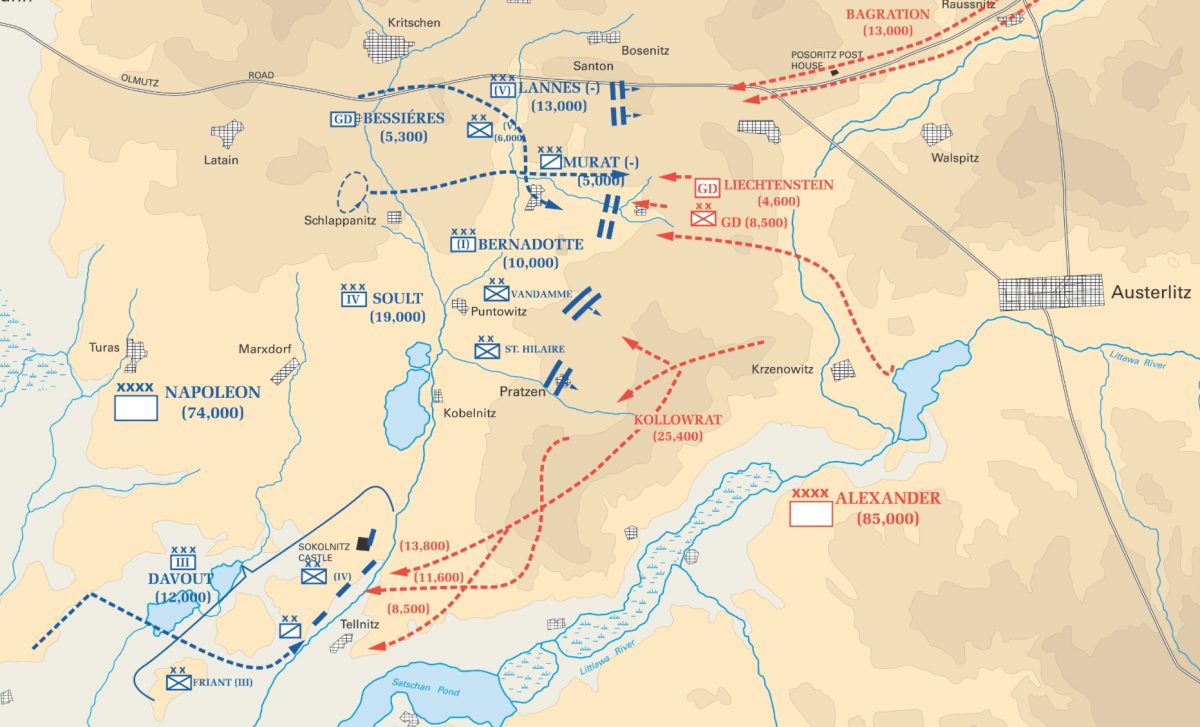
By far Napoleon’s greatest achievement was the Battle of Austerlitz. At this battle, Napoleon defeated Russia’s Tsar Alexander the First. The battle is most famous for what is considered to be Napoleon’s masterclass performance. He ordered his troops to retreat from the battle across what seemed like a snow covered field. The Russian troops followed, and once the French troops were cleared of the area, Napoleon’s artillery fired down onto the field, revealing it to be an ice covered lake. Near all of the Russian troops drowned or died of hypothermia, allowing Napoleon’s massively outnumbered forces to claim victory.
Many people would place Napoleon as number 1 on this list. Despite this, I didn’t rank him as highly since this list is strictly for military strategy. While Napoleon did do a lot more notable things other than winning battles, that simply isn’t what this list is about, so he gets placed in third.
Second Place – Cyrus the Great
Cyrus the Great, founder of an empire that everyone reading this has certainly heard of, the Achaemenid Persian Empire. It was Cyrus’ empire that would stand the tests of 220 years, only falling to Alexander the Great.
Early on, Cyrus was the leader of the country of Anshan. Anshan was a small vassal state of the much larger Median Empire. The Medians controlled vast territories in Persia, Asia, and the Fertile Crescent. On the other hand, Anshan was a tiny country which had almost all of its army and resources controlled by the Medians. Despite this, Cyrus somehow defeated the Medians. While historians still don’t know exactly how Cyrus conquered Media, most agree that he likely did it in a similar way as Alexander the Great, that being military conquest and excellent strategy.
After Cyrus’ defeat of the Medians, conquering the large majority of their land, he continued his conquests. He would conquer Anatolia and more of Central Asia. He would also invade the Neo-Babylonian Empire, a country that stood for 87 years and had its roots traced back to the first civilizations, in roughly 3 months. This was where Cyrus’ invasions would end.
Overall, Cyrus created an empire larger and stronger than its predecessors and one that would go on to conquer large portions of India, Egypt, and the Balkan Peninsula. While Cyrus the Great was certainly an excellent strategic mind, the sheer amount of unknowns in his life leads me to place him here, at second. If we ever learn more about how he conquered Media, I would certainly consider placing him in first place.
First Place – Alexander the Great
Last, and certainly not least on our list is Alexander the Great. Many people know who he is and what he did, so I’m not going to go into immense detail, and I’m instead going to go over some of his highlights.
At the age of 21, Alexander began his invasion of the Persian Empire. He would spend the rest of his life at war, not once returning home. Time and time again he would beat the Persians and their leader, Darius. He did this despite being outnumbered. Sources vary on how outnumbered Alexander was, with some sources claiming as much as 5:1. Alexander’s crowning achievement was the Battle of Gaugamela, where he decisively and totally defeated the Persian Army.
Despite being so outnumbered, Alexander never lost a battle in Persia, only losing after attempting to invade India. Speaking of which, many people hold his failed invasion of India against Alexander. I, personally, do not. Alexander had no knowledge of the terrain, the army he would be facing, or the tactics his enemies would employ. It makes sense that Alexander failed to invade India, especially considering that his army was exhausted after 15 years of total, grueling, war.
Overall, I place Alexander the Great as the strongest strategic mind in history. He was able to conquer an empire that had stood for 220 years in the span of 15, he routinely outmatched the Persian army, and he created the largest empire the world had ever seen at the time at only 30 years old. Along with this, Alexander’s influence would be felt far into the future with the Selucids and Egyptians (2 groups that broke away after Alexander’s death) existing far into Roman times.
Final Remark
Thank you for reading all the way through this article. I would like to say that nothing in this article was meant to offend anyone and that this list is entirely subjective and may not be the same top 5 that you would make.