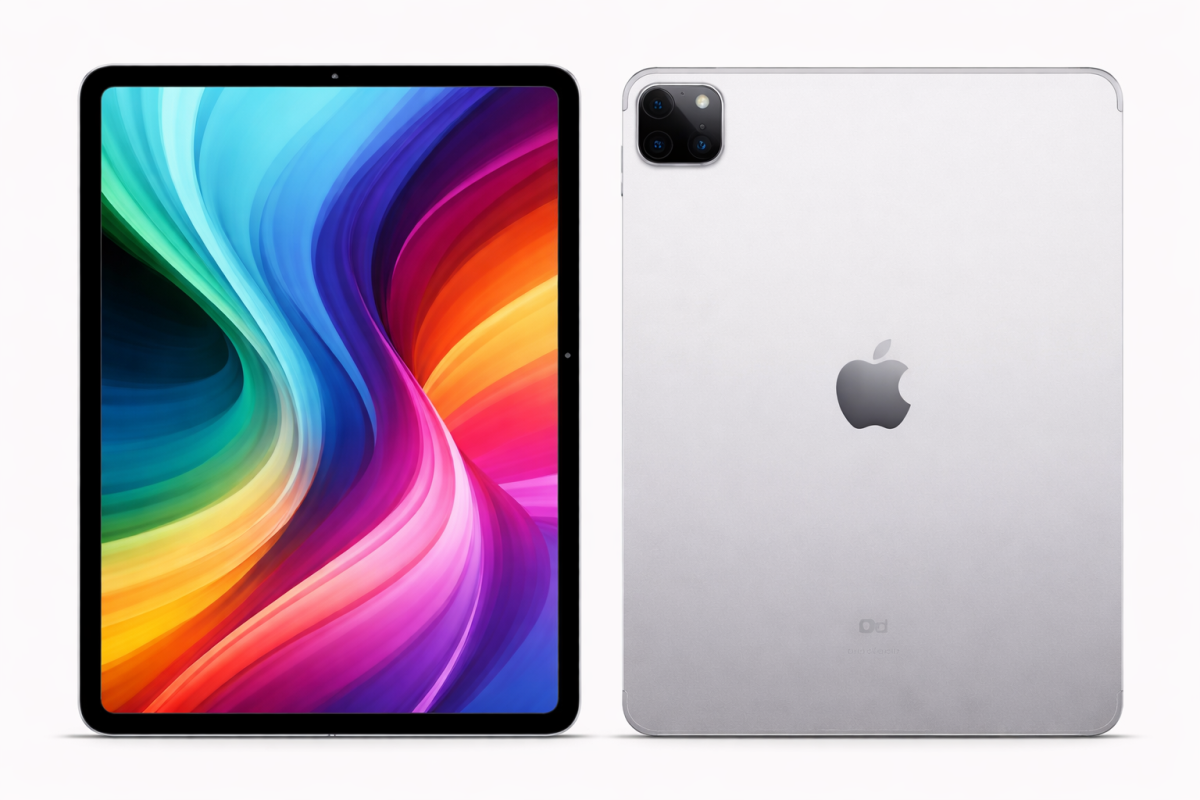



















Throughout the world, many schools are changing the traditional teaching and learning happens because of all the technology we use today. Most schools incorporate the use of iPads, iPhones, and laptops in the classroom. At Central we heavily rely on our iPads, and it is required to have one at the start of freshmen year. Many teachers use ipads to teach students by providing notes and assigning homework on the iPad.
However, we have to ask, are iPads really the way schools will work in the future or is ipad use just a temporary thing?
An article published by the University of Connecticut states, “Technology is always transforming education. According to the latest surveys, 76% of students say that technology makes learning more engaging and 90% of teachers say that technology helps them to assess student learning more effectively.”
What are the pros and cons of using iPads?
Pros:
One of the reasons schools are using iPads so much is because they are convenient. Instead of carrying around a ton of notebooks, textbooks, and folders we can put all that information on the iPad. We can keep our notes, assignments, textbooks all in one place, and on the same device.
Convenience makes it easier for students to stay organized and find what we need quickly. For example if we need to look at notes from earlier in the year we can easily scroll through or search through our digital notes instead of flipping through pages in a traditional notebook.
Teachers can also benefit from the system that implements ipads. In the past, teachers had to print hundreds of papers for assignments and notes and write notes on the board. However, with ipads they can upload the notes and assignments digitally to Google Classroom and every student accesses it easily. Also, if a teacher wants to make an announcement or update an assignment they can do so quickly without needing to print anything or waste paper.
Overall, this can save time and paper which is another reason schools are using digital work more.
An article from Drexel University states, “Integrating simple technologies, Power Points, games, internet homework assignments, or online grading systems can be difference makers in students’ growth in the classroom.” This shows that although technology, can provide distractions, it can actually help keep kids engaged in class, so they learn more.
Another good thing about using iPads in school is that we can get to information quickly. If we do not understand a topic we can look it up on the iPad. ipads also allow us to watch videos, read articles, and do practice problems. In theory this should help us learn better, but it does not always work that way.
Cons:
With iPads, we can get information from anywhere, making it easily accessible, but some people use that power in the wrong way. iPads can be used to cheat and allow AI to do our work for us.
There are also some other bad things about using technology in school. One of the problems is that it can be distracting. iPads are not just limited to schoolwork because they can be used to play games, watch social media, and even message others. Even if we start class thinking we will focus, it is very easy to get distracted by something on the iPad, all it takes is one notification.
The problem of distractions is worse in the physical class. If we finish an assignment it is tempting to open another app or do something else. When schools try to block websites or apps it is not very hard to find ways around them. Many students have found that using VPNs or hotspots can easily bypass any app blockers. Overall, iPads can make it harder for us to stay focused in class.
In addition, not everyone learns well on a screen. The screen inferiority effect is a phenomenon that says that people retain less info when reading on screens. Oxford learning states, “A 2024 meta-analysis of 49 studies found that students who read on paper consistently scored higher on comprehension tests than those who read the same material on screens.” Writing by hand makes us slow down and think about what we’re writing. Compared to when we type notes on the iPad we might not think about it much because typing is so natural. In general , many people just learn better when they physically write things down. Staring at a screen all day can be tiring. We already use phones and computers regularly, so having to use iPads in school can increase eye strain and make it harder to focus. Sometimes, it is simply more difficult to read or study on a screen than on paper.
Additionally, constant exposure to blue light can disrupt sleep schedules. A study by the American Academy of Ophthalmology states that too much exposure to blue light from screens in the evening can interfere with the body’s natural sleep cycle, known as the circadian rhythm. This is because light slows the production of melatonin, the hormone responsible for sleep.
Technical issues can also cause problems such as running out of battery or the internet not working well, and when this happens teachers have to stop the lesson to try and fix the problem which can waste time that we could be using to learn.
Another issue is that using technology so frequently can weaken some basic skills. For example, if we type all the time, our handwriting may get worse. Some people also become too reliant on technology to solve problems, so they don’t try to figure things out on their own. Instead, they simply look up the answer online. While this might help us finish assignments faster, it does not mean we truly understand the material.
Summary
Even with these problems, it is clear that technology is not going away. The world outside of school relies heavily on technology, so it makes sense for schools to prepare students for that reality. Many jobs require people to be comfortable using computers and digital tools. Because of this, completely removing technology from the classroom is not realistic.
Instead, the important question is how schools use technology. iPads can be helpful when they are used to support learning, not replace traditional methods. For example, they can be useful for research, completing assignments, or accessing materials that might otherwise be difficult to find. At the same time, traditional tools like notebooks, textbooks, and handwritten notes still play an important role in learning.
Using both technology and traditional methods may be the best approach. By combining the two, schools can gain the benefits of iPads while avoiding some of the drawbacks. Students can learn to use technology effectively while also developing important skills like writing, focus, and independent thinking.
In the end, iPads have changed the way many schools operate, including here at Central. Technology has made it easier to distribute assignments, organize materials, and access information quickly. However, they have also introduced challenges such as distractions, technical issues, and changes in how students learn.
Because of this, it is difficult to say whether iPads are truly the future of education or just one step in the ongoing evolution of schools. What is clear is that technology will continue to play a role in education. The challenge for schools is to find the right balance between using technology to improve learning and maintaining the traditional methods that have helped students succeed for many years.