














The Issue
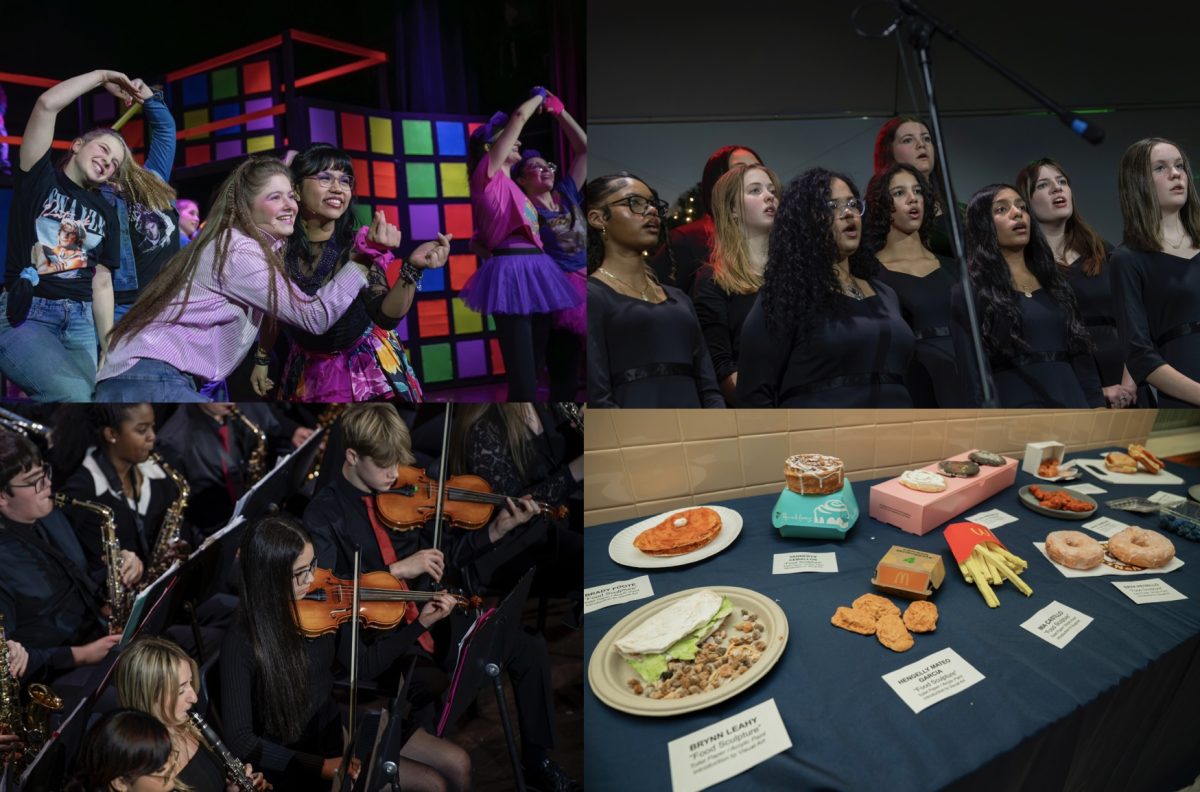
While Central Catholic has become famous in the Merrimack Valley for its accomplished sports program, there is also a vibrant arts scene that continues to grow each year. At CCHS, students have the opportunity to participate in a variety of arts activities including band, choir, theater, and art clubs, yet some of the students involved in these activities feel that there may be a general under-appreciation for the arts within the school community. This article attempts to address the issues and trends within the arts programs at CCHS, as well as the arts community in Massachusetts and nationwide.
Arts at Central Catholic: Thriving with room for improvement
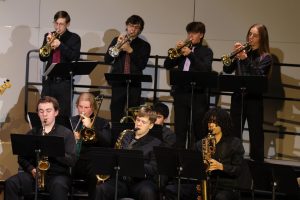
Involvement in the arts program seems to be increasing at Central—there are 52 students enrolled in Band this year, while there were only 16 three years ago. There are six sections of music classes this year (AP Music Theory, Songwriting, and Rock and Jam Class) with an average of 15 students in each of those classes. The Rock and Jam Class had 26 students, many of whom are not members of the regular concert band program (there were only 3 crossovers).
Involvement in the visual arts scene at Central has also remained strong in recent years. Mrs. Roeser (Chair of the Fine & Performing Arts Department and Art Club Advisor) describes Art Club as a “thriving activity,” with about 25 consistent members and numerous casual drop-ins. Many Theatre Guild members and athletes try to prioritize Art Club in their offseason, and both Art Rooms are filled nearly every meeting.
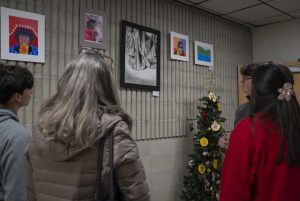
There is a wide variety of art classes for students to choose from, and art “tends to be the popular choice when it comes to electives for Freshmen and Sophomores,” according to Mrs. Roeser. There are about 12 sections of the Introduction To Visual Art class each year, and there are currently 36 sculptors, 28 painters, 8 photographers, and 8 AP Studio artists.
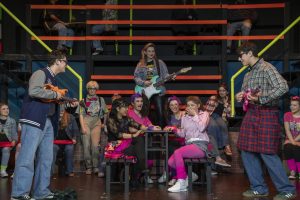
In the Theatre Guild, involvement has stayed consistent at about 60 students involved in each of the two annual productions, according to Mr. M. Joyal (Theatre Guild Director and Social Studies/Visual Arts Teacher).
Mr. Denmead, Mr. Joyal, and Mrs. Roeser all generally agree that while there are certain areas that could be improved, CCHS has been very supportive of the school art programs. When asked about support for the Theatre Guild at Central, Mr. Joyal stated:
On the other hand, Mrs. Miner, a CCHS English teacher who has worked in public schools, says that she is “impressed by the high turnout of students at CCHS productions compared to other schools in the area. I am always amazed at the positive school spirit here and that extends to the audiences at our plays and musicals.”
CCHS is largely successful in providing a wide variety of artistic opportunities for its students—from packed art club meetings to sold out theater productions, the arts here are clearly thriving in many respects. However, there are some ways in which our school could benefit from more support for the arts programs.
For instance, rehearsals for Concert Band occur three times a week starting at 7 am which poses a potential scheduling conflict for families and a strong deterrent for students who hope to get more sleep. As a student who took the bus to school every day during my Freshman and Sophomore years, I was unable to join Concert Band until I received my driver’s license and was able to drive myself.
Furthermore, many students involved in the Concert Band are frequently forced to miss rehearsals due to labs for AP science courses, as well as other morning meetings which take precedence over Band. According to Mr. Denmead (Band Director and Music Teacher), the Concert Band averaged one fifth of the ensemble missing from every morning practice in the first semester of the school year.
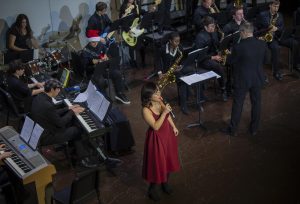
For members of Concert Choir, Central Harmony, and the Liturgical Band and Chorus, after school rehearsals can be impacted by sports and other extracurricular activities. Regarding this issue, senior Satvi Mahesh (‘26) says, “As a part of Concert Choir, Central Harmony, and the Girls’ Swim team in the fall, I often needed to miss rehearsals or go late due to practices or meets. Even though choir is scheduled later in the day, swim and other sports seem to come first before choir rehearsal.”
Possible solutions may include creating classes during the school day schedule for Concert Band, Jazz Band, and Concert Choir/Central Harmony, or permitting students to choose to attend an arts activity over a sport practice after school. Mr. Denmead previously taught at a school where students had nine classes a day, permitting them to take band and choir classes. However, this school also required a 7 hour and 40-minute school day (an additional 75 minutes, or a nearly 20% longer school day).
Despite scheduling issues for the arts programs, student body support and attendance seems to be improving in general. The Theatre Guild frequently sells out on all three days of their productions, and almost every seat in the theater was filled at the most recent Christmas Band and Choir Concert.
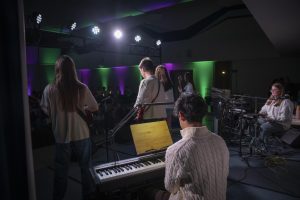
Support for the arts at our school can also be seen in the music and arts departments’ support of Visions Coffeehouse, a highly-attended, recurring talent showcase where students perform music and poetry. At the event, volunteers from the faculty and staff try their best to help students rehearse and provide equipment to make the night a success. Mr. Denmead also emphasizes that the school helps students pay the cost of auditions and membership for District Band and Chorus, and the music program can provide equipment to students who may have difficulty obtaining proper equipment. The biggest issue, in his opinion, is time—in a school built with less emphasis on having a strong music program, it can be difficult to “figure out a way to get [the music program] to fit” within a tight, ingrained school schedule. At Central, it’s important to change the mindset that a student can only be in athletics or the music program; when conflicts arise, coaches and arts teachers must communicate with each other and work together to work it out. Summarizing the recent developments within the music program, Mr. Denmead says:
Mrs. Roeser noted that the arts department does “have a healthy budget and [is] able to get all the supplies […] need[ed].” However, they would love to introduce some new courses, like Digital Art, Art History, or Ceramic,s but the current daily school schedule and the limited number of visual arts teachers make this impossible. Additionally, she adds:
So, at CCHS, while scheduling conflicts and performance attendance could be improved in certain ways, engagement with the arts seems to be relatively high as a whole. But beyond understanding the issues and developments within the arts program at Central Catholic specifically, it is also important to consider the issue at a state and national level.
In Massachusetts
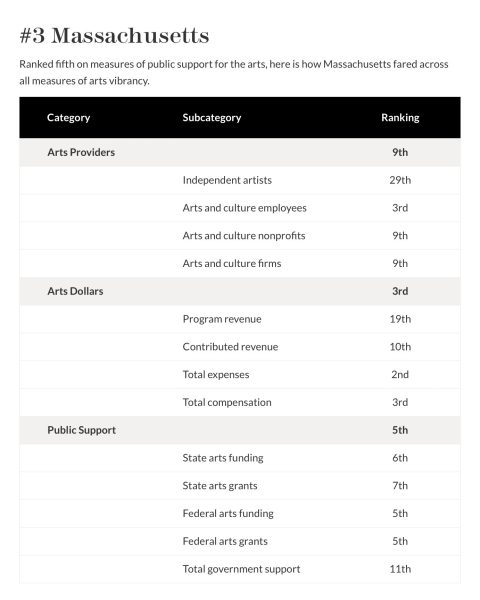
As of about a year ago, Massachusetts ranked #3 of all 50 states in an arts-vibrancy study done by SMU DataArts, behind New Jersey (#2) and New York (#1). Within this ranking, Massachusetts ranked 9th for Arts Providers, 3rd for Arts Dollars, and 5th for Public Support. Overall, our state and region seem to be high performers for public arts funding, especially with Boston being #3 out of the top 20 arts-vibrant communities with a population of 1,000,000 or more.
At a National Level
Despite relatively strong funding and support for the arts in the region, the lasting effects of the COVID-19 pandemic and recent federal budget cuts may put arts programs in jeopardy at a national scale.
In Times of Economic Strain, Arts Programs Are First to Go
Economic downturns in recent U.S. history have proven that when school districts face budget pressures, music and arts education are typically first to be cut.During the Great Recession of 2008-2009, school districts across the nation saw “severe declines in their art and music offerings,” according to the Save the Music Foundation. In Georgia, 42 percent of schools removed art and music because of the Recession.
The more recent COVID-19 pandemic had similarly detrimental impacts on arts education, programs, and educators. In Massachusetts, the average cultural organization was forced to reduce its budget by 12%, scale back its operations, and try to attract additional support in order to survive during the pandemic. Unfortunately, arts attendance remains low today. According to an article from Arts Professional, recent government data has shown that “the proportion of people engaging with the arts physically on a weekly basis has fallen by 14 percentage points” over the last two years (article published May 2024), largely due to the high cost-of-living and the lasting effects of the pandemic. With general support for the arts low in recent years, it follows that school arts education is also negatively affected.
Impact of Federal Budget Cuts
On top of the aftermath effects of the pandemic, recent actions by the current administration have only made things harder for arts institutions and programs around the country.
On January 20, 2025, President Trump officially disbanded the President’s Committee on the Arts and Humanities (PCAH). Soon after, on January 27, 2025, the Office of Management and Budget sent a memo to all federal agencies ordering them to stop all federal grants, loans, and other financial assistance funds related to “foreign aid, nongovernmental organizations, DEI, woke gender ideology, and the green new deal.” Following this, in May 2025, the Trump administration terminated hundreds of existing National Endowment for the Arts (NEA) grants, greatly impacting fine and performing arts programs and education. The President’s Fiscal Year 2026 budget proposal sought to eliminate the NEA, as well as the National Endowment for the Humanities (NEH), and the Institute of Museum and Library Services (IMLS).
According to its website, Mass Humanities had lost almost 35 percent of its budget—more than $1.3 million—as of April last year. The future of the NEH is uncertain and reportedly 80 percent of its staff was laid off. These significant federal reductions will have a devastating effect on arts programs and education across the country.
Because Central Catholic does not rely heavily on federal funding, these federal budget cuts will not have a noticeable impact on our school; however, “public schools will be scrambling really soon, and music programs will be cut, [especially] in middle school and elementary,” according to Mr. Denmead. Without foundational learning in the arts at a young age, it’s challenging to further develop music and arts education at a high school level.
Why is it important to ensure adequate funding for the arts, both at our school and at a national level?
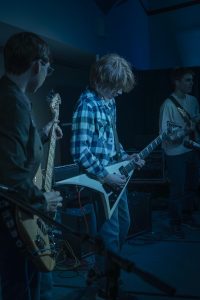
Numerous studies have shown that arts education has significant health and developmental benefits for children. The arts provide students an outlet for creativity and self-expression and a way to socialize with others or take a break from stress. According to Satvi Mahesh (‘26), “Being a part of choir, central harmony, and a regular performer at visions since freshman year has helped me build so many strong connections with people, and has helped me share my love of music with others, all while engaging in Central’s supportive musical community.” According to Murray State’s Digital Commons, “students who participate in art, music, theater, or dance are more likely to succeed in school and are at a lower risk of getting involved in drugs and alcohol.” In fact, data from The College Board shows that students who take four years of arts and music classes while in high school score an average of 92 points higher on their SATs than students who took only one-half year or less. Without adequate funding for arts programs in schools, students miss out on opportunities for skill development and personal growth.
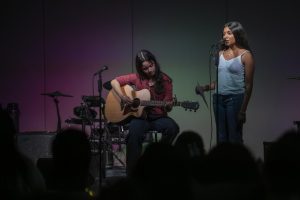
In my own experience, music and art have consistently had a major impact on my life. Since starting piano lessons at four years old, piano has taught me dedication, patience, and the importance of practice. Joining Band and performing at Visions Coffeehouse in high school taught me that music is most enjoyable for me when it’s played within a group of people working to create a unified sound. More recently, picking up guitar has taught me that you always have the time and ability to try new things. While I don’t plan to pursue music as a career, the skills I’ve learned from my music education will stay with me for a lifetime.
The arts are an absolutely essential element of society and a necessary experience for every person. Starting at a young age, students should be exposed to multiple forms of art—primarily music, visual art, and theater—through their school education. The evidence shows that although participation in the arts is important for student development, arts programs across the country are often deprioritized and underfunded. While the arts are well-supported at CCHS, there are opportunities for improvement in several areas, including conflicting schedules with other extracurriculars and attendance at school art performances. Financially supporting and properly respecting the place of the arts in schools and society leads to more fully enriched citizens who create a better world for us all.