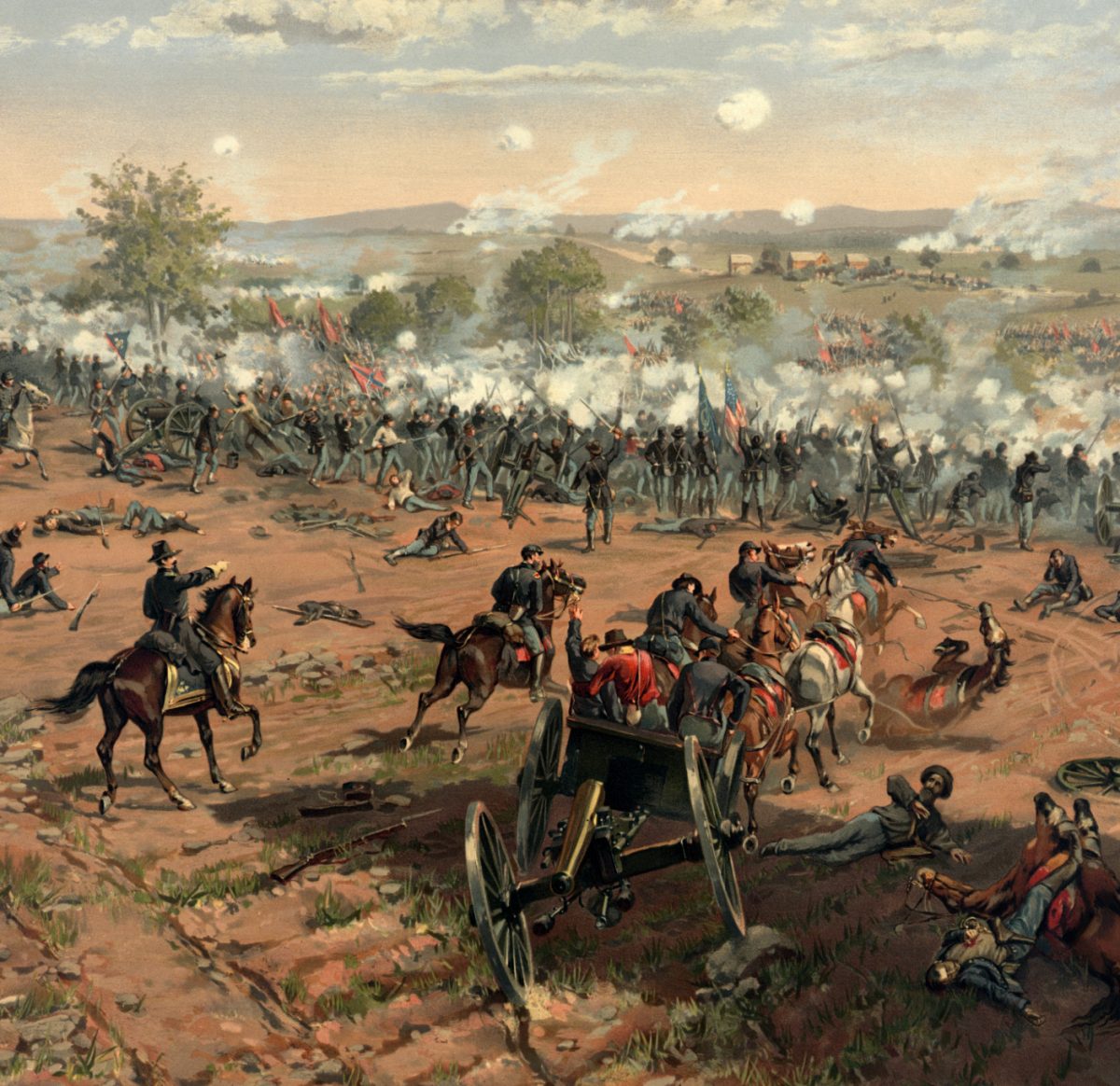









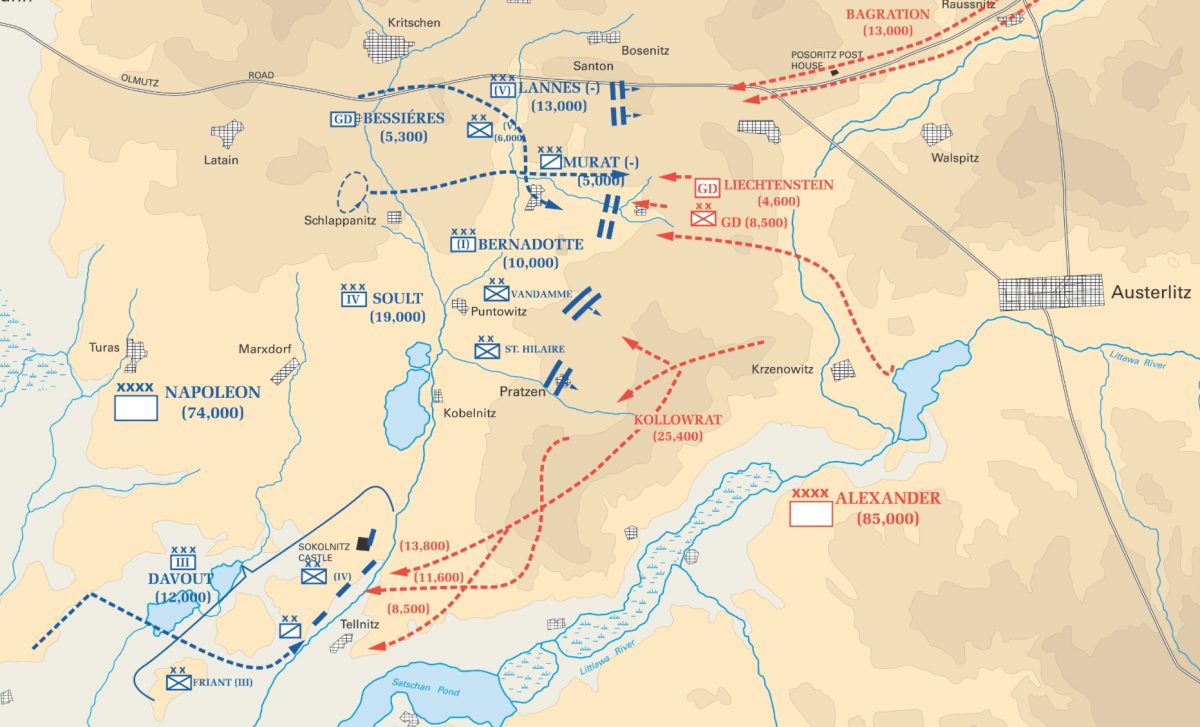














The year is 579 BCE, and tension at the Bisom Strait has reached an all-time high. War is on the horizon between some of the first civilizations in the world as two cities are going to battle against each other. The idea of war is new to everyone, and that would become clear in the string of battles that are now known as The War of the Bisom Strait.
A World Anew
This is the world of Magnai. A world sporting vast oceans, stretching plains, rivers that breathe life, and mountains that seem to reach the heavens. It is a world of untapped potential, upon which humanity has just laid its eyes on.
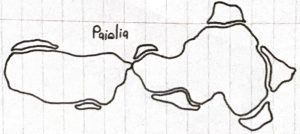
By 585 BCE, cities had popped up on the northernmost continent known by its people as the continent of Paiolia. We now know of continents beyond Paiolia, but these people did not yet. No one had ventured far beyond the continent, resulting in its people believing there to be nothing beyond Pailolia.
These people had made great discoveries in the years prior to 585 BCE, resulting in a surplus of crops and the settling down of people. These settled people created cities throughout the continent. They knew how to farm, how to distribute food to the masses, how to govern themselves, and how to shape metal to their benefit. These cities became increasingly proud of their accomplishments over time and would seek to tell their stories across the lands. Despite the promising start, this pride would lead to the first ever armies being raised, and war becoming something beyond the myths of her people.
Tension at the Strait
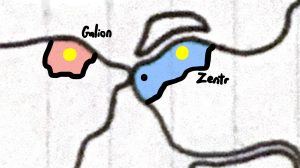
The land of Magnai was separated into two parts by the 11 mile strait of Bisom. On the eastern side of this strait lay the city of Palio. Palio was among the first cities on the continent. Despite this, a bout of political turmoil had led the city to be sold peacefully to the neighboring city of Zentr. This made Zentr the first multi-city country not only in Paiolia, but also in the entire world.
Roughly 20 miles north of the strait, on the western land mass lay the city of Galion. Galion’s people had been envious of Zentr as they had intended to purchase Palio, but were out-bid by Zentr. In response to losing out on Palio, Galion’s government sent out 25 people to the west side of the strait to claim it for Galion. These people were made up of engineers, blacksmiths, farmers, and other professions that would prove useful in setting up a small camp.
This group had brought with them short copper swords and round shields. These weapons were initially brought in order to defend the camp from wild animals, but would later be used for a far worse cause.
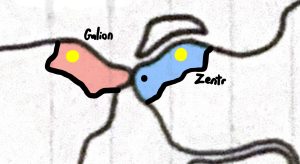
During the summer of 581 BCE, citizens of Palio noticed a sizable fort across the strait. Upon receiving permission from the Zentr government, a small group of about five people were sent across the strait to examine the mysterious fort. Upon seeing the people coming across the strait, a few people from the Galion fort went to meet them. Three of these people had just gotten back from hunting, and were thus equipped with copper swords.
The two groups met just at the shore of the beach. The people from Zentr asked who the fort belonged to, to which they responded, Galion. The Zentr people were confused, as they had received no notice about the construction of any Galion fort. The people from the fort then claimed that they didn’t need permission from anyone else in order to claim land. The Zentr citizens then asked to see a permit for the fort signed by the congress of Zentr. They asked for this because as far as the Zentr government was concerned, this was their land. The Galion people restated that they didn’t need the Zentr’s permission. The civilians then threatened to have their government come and force the fort to be taken down. To this, one of the members of the fort who had just gotten back from hunting, and was aggravated by this entire conversation, raised his blade and struck one of the civilians.
The man fell in a heap as the rest of the civilians began to run back to their boats. Most of the fort’s men were confused as to what was happening, but their frenzied member didn’t care. This man was selected by the Galion government to lead Palio after their purchase of the city. Upon being out-bid, this man swore that he would have his revenge on the group that cost him power and prestige. By the time the crew had made it to their boats, two lay dead and another was severely injured.
Diplomatic Tension Boils Over
After the group of Zentr citizens returned to shore and made sure their friend got to a hospital, the two remaining citizens rode to the city of Zentr on horseback where they told the government about what had happened. The Zentr congress was outraged at the news and sent an ambassador to Galion in order to get answers from the king himself.
Despite this, their message wasn’t delivered completely intact. An advisor to the Galion king had intercepted the message, changing it slightly so that it came off as a threat rather than a request for answers.
This advisor was named John Buchart, but would later come to be known as Buchart the Militarist, because he would later be known as the man who began and created the first army in the world.
The king was angered by the threatening message to such a degree that he sent back his own message demanding that Zentr back off and that his people have the right to claim the land as theirs. This, however, was not enough for Buchart, for he had a plan. He convinced the king that Zentr was going to block the strait, thus cutting off nearly all foreign trade to Galion. He then proposed what he called The Armystata, which would later come to be known as the army.
The Armystata would be a company of about 250 men, led by himself. They would be armed with copper swords and round shields, refitted to be sturdier than their hunting counterparts. These brave 250 men would be trained to use their weapons to fight against other groups of people and to defend Galion. Upon their creation, Buchart would lead The Armystatainto Palio and capture the city, assimilating it into the country of Galion and protecting their trades.
The king loved this idea, and immediately granted the permits necessary to create the armystata. He then issued everything to Buchart, designating him as the primary executive of the armystata. Their plan was thrown off by a spy that had been sent by Zentr into Galion. He warned the Zentr government of The Armystata and told them that they needed to raise an armystata of their own in order to meet them. In his message to his government in Zentr, he famously wrote “The need for an armystata is of upmost. Our country will fall due to anyone’s ignorance in the matter.” Then, in 579 BCE, only a few months after The Armystata was approved, Galion went to war.
The First War
The war began as Buchart led 150 of his 250 men across the Bisom Strait and right into Palio. As they landed and approached the walls of the city, the large wooden gates opened up as 200 Zentr soldiers ushered out. They stood at relative attention, in a large force 20 by 10. It was clear that their training had been slightly rushed due to the circumstances, but that didn’t matter all that much. Buchart had planned to take the city without challenge, having no idea that Zentr had created their own armystata.
Upon seeing the enemy, he ordered his men to stop and form up into a 30 by 5 column of soldiers. He then walked to the from of the column and called into the city demanding to see Palio’s defending commander. No one showed. It turned out that their commander was in the city Zentr as he was a member of the congress and was told he must stay in the capital city. Thus, his men received very simple orders because he couldn’t deliver them efficiently. They had simply been told to form up, and defend the city.
Buchart, annoyed, walked to the back of the column. Upon reaching the back of the column, he ordered his men to charge at the enemy. The Galion army charged at the enemy in the first battle that the world had ever seen, pitting two countries and their people against each other. Buchart’s army punched through the Zentr lines with ease due to the Zentr soldier’s lack of training. The truth was, while Galion’s soldiers had seemingly made progress, they had less people total and lost more people than their enemy. Despite this, with no leader, battle plan, or sufficient training, the Zentr army fled en mass.
Buchart became enraged at Palio’s resistance, but was under direct orders from the king to leave the city intact. The king wanted to take Palio and force Zentr’s surrender, whereas Buchart wanted to punish both for resisting Galion’s rule. Despite his wishes, Buchart listened to the king, allowing Palio’s citizens to maintain their normal lives simply under new leadership.
The casualty reports were received by Buchart a few days after the battle had happened. Casualties for the Zentr forces were unknown due to their fleeing, but it was estimated that they lost around 50 soldiers. However, the Galion reports were spot on. Buchart had won the battle, but in doing so, he lost 80 of his soldiers. This crushed Buchart as many of these men had been personally trained by him for this war. Despite this, he moved forward. He gathered the rest of his soldiers from the other side of the strait, bringing his total soldiers to around 170.
Despite having a much smaller amount of soldiers than hoped, Buchart moved toward the city of Zentr, having his troops set up camp around the city. The thing was, that Buchart knew his soldiers only had enough food and water to supply his army for a few days, but he believed that the sheer presence of his army would scare Zentr into offering peace. This is also exactly what happened. The Zentr government was so scared by the enemy army and their lack thereof that they asked for peace.
The Spoils of War
The peace treaty was rather simple, and didn’t punish Zentr all that much. They were forced to give up the city of Palio, and would need to limit the size of their army to 150 people.
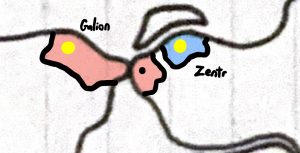
After peace was declared and the Galion flag was raised on the citadel in Palio, Buchart was offered the role of governor. However, in a turn of events that no one expected, Buchart chose to turn down the position and the power that came with it, instead remaining the commander of Galion’s Armystata. In the years after the war, Galion would grow its armystata to 1,150 well-trained soldiers.
Despite Galion’s success in the aftermath of the war, the same could not be said for the city of Zentr. Zentr lost all of its political standings on the continent. Several cities dropped out of trades with Zentr, resulting in a massive bout of political turmoil in the city.
Along with all of this, The War of the Bisom Strait introduced the idea of The Armystatata to all cities across the continent. It quickly became a standard for every city to have their own armystata, thus bringing the possibility of war to every city on the continent due to the newfound fire-power.
One city in particular would benefit greatly from the creation of the armystata. This city was known as Decini. Or, as it would later be known, the Vasni Empire, the world’s first empire.