




















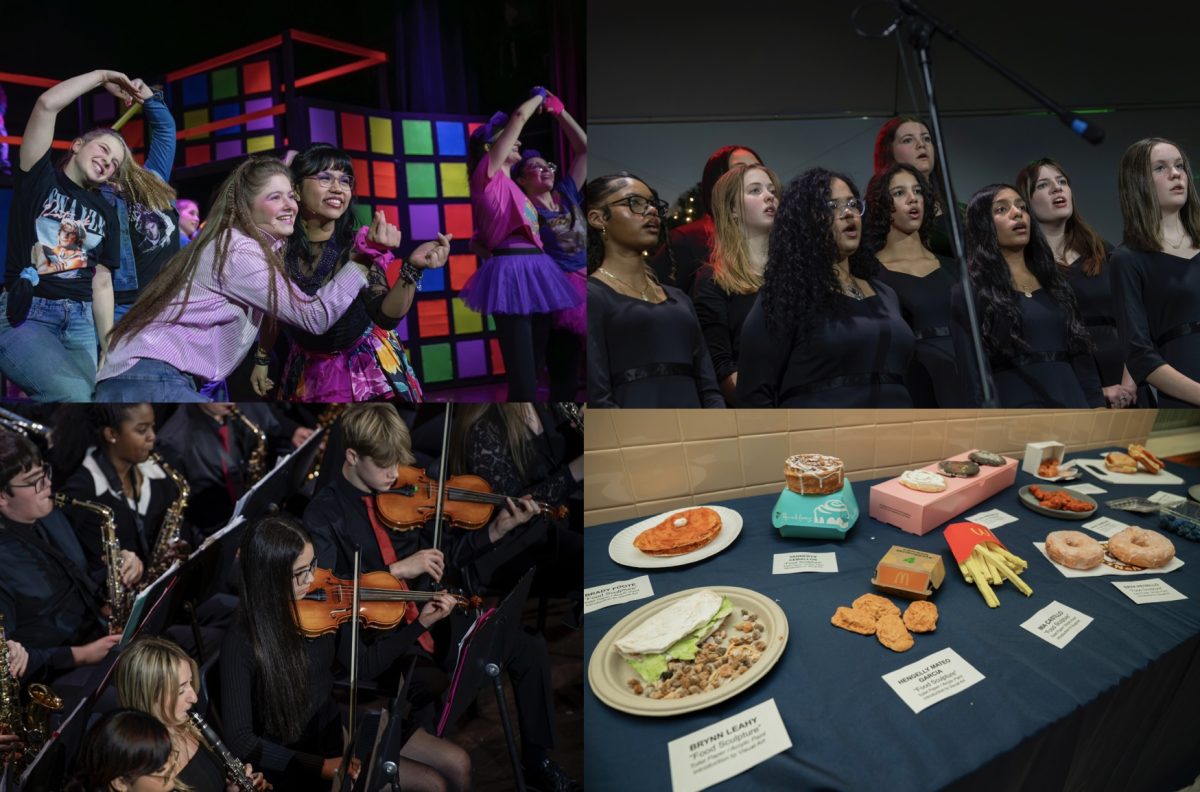

The entertainment industry is filled with magical moments created with musicals. Seeing a musical is like watching a 3D movie except you are watching real people performing right before your eyes. You watch the story line unfold in real time, the actors shining in spotlights and the singing echoing through the theater. Even though it’s impressive, it’s not so easy. The actors and actresses have to go through months of training. What we don’t see on stage is all that has happened “behind the scenes,” and the only way to understand the whole picture is to take the mask off.
From the Directors
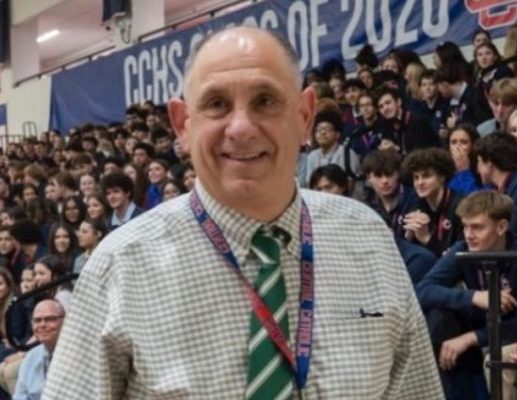
With a click of a button you can easily figure out what showcases are happening near you. An easy process right? On the director’s end, it’s much harder than buying a ticket. They have to consider production hours, the cost of rights, cost of tickets, and the number of students who will likely audition. To understand more, I interviewed the Theater Guild directors at Central Catholic High School, Mr. Joyal and Mrs. Thompson, who choose the play and musical every year.
“How do you decide what show you want to put on?”
Mr. Joyal: “That’s a good question. I think on some level, part of it comes down to…we have some known unknowns. And so we know going into the process, who will come back for everything that we do no matter what. Like the people who are a part of the Central Catholic Theater Guild, no matter what show we do, they audition. And so we look at that as our core group of talent in terms of what we think would be within the realm of possibility. And then account for the fact that we always end up with somebody new and some new talent auditions that we have never ever predicted. I feel like we always assume that we don’t know the full spectrum of what we end up with [until the auditions].”
Mrs. Thompson: “And then we personally agonize over it back and forth, and we think we make a decision, and then we go back and rethink our decision, and we want it to be the best decision for the kids and for the program.”
“It is rumored that you always have a connection between the play and the musical, is this true?”
Mr. Joyal: “I mean, it wasn’t, but now…It does feel like it has come true. It feels like a thing now that we are just playing into.”
“How do you get the rights to the show you are doing?
Mr.Joyal: “So the Central Catholic Theater Guild has at various points in its history done debut performances that were written by faculty members and stuff like that. When it is something that is established and that exists like Star Stars or The Little Mermaid or The Little Shop of Horrors, there are companies that control rights. So what you do is you contact the company,…provide them all of the details like the size of the theater, the dates that you want, what you’re thinking of charging for tickets. And then they look at all of that and they either approve it or deny it.”
“What is your favorite part of the whole production?”
Mrs. Thompson: “I can’t do any of the musical or tech stuff like Mr. Joyal can do. So I usually get the privilege of being backstage, and so I get to see the audience reacting to the performance. And I get to see the kids coming offstage, sometimes dancing in the wings to the songs. So I think just the excitement of show night and being able to see from backstage, that’s what I look forward to most.”
Mr. Joyal: “Watching the audience is a lot of fun and there are definitely some long, long time supporters of the theater guild that maybe I got to work with when they were students or I know because they were somehow involved. I do like to see how the audience responds to all of the hard work. That’s a big one for me because I know how hard everybody’s working to make it happen. And the payoff is when people in the audience are having a good time and we can distract them for a little bit from whatever’s going on in their lives.”
Mrs. Thompson: “ Second to being backstage, I think it’s also the day after the Thursday show when all the teachers are coming up to us and saying… ‘how did you do this?’ And even students are asking us questions. So I think that’s another really rewarding part of it…the energy is always really good.”
“How has the program grown or changed over the years and what are your hopes for its growth in the future?”
Mr. Joyal: “I think part of this is due to the pandemic, but our program has kind of fluctuated in size over the last like 20 years. That goes back to when I was a freshman. I would say we have grown into something and I’m going to credit Mrs. Merril with a lot of this as it’s a place where people who might not pursue theater as a major in college or as a career will have an opportunity to do theater in a community that is supportive. I don’t know that anywhere does it quite like we do.”
Mrs. Thompson: “In terms of looking forward, I would obviously want to continue to cultivate that community and hopefully bring even more kids into the fold; find the right kind of shows that will make a kid audition that might not have planned to ever be a part of theater.”
Mr. Joyal: “We always find people who wait until their junior or senior year to take a leap and try it out…I do wish that those kids, because they exist every year, would come and try it a little bit earlier.”
Many of these processes are common in other companies or schools when it comes to the decision of the production. Many factors are taken into consideration when Mr. Joyal and Mrs. Thompson discuss the musicals for the following year. Another key factor that has to be addressed is the number of students taking part in the audition process. There are many ways directors can choose to hold auditions, sometimes it’s all in one room and some have call-backs. Emma Correia is a student in the CCHS Theater Guild, she tells of how it is a “very nerve racking” experience that only gets better from there. Now that we know what it’s like for the students, here is the view from the CCHS Theater Guild directors, Mr. Joyal and Mrs. Thompson.
“How do you conduct the audition process and come together to decide the roles?”
Mrs. Thompson: “Well, we always tell students that we don’t have students audition for individual roles. So what we’re looking for when they audition is the potential that they can bring to a character, how much life they bring to that character, and how they use the description and scene to build that character. And then after auditions are over we talk through our impressions of that process. But that is a process that’s done with a lot of thought and effort into making sure that we can produce the best show for the audience.”
Mr. Joyal: “In many cases, it’s like trying to solve a puzzle; which person fits best in which role?”
Mrs. Thompson: “Sometimes we can think about, well, maybe, based on that character, could they do this thing? And then when one or two pieces fall into place, it can start to go from there and build.”
Crew Groups
Actors are not the only people who are working during a production. The crew is a group of people? who work together to create all the backgrounds and costumes. At Central Catholic High School, there are groups of three types of crew students: hair and makeup, set crew, and hospitality. Each division works together to create the details that make the show unique.
Hair and Makeup
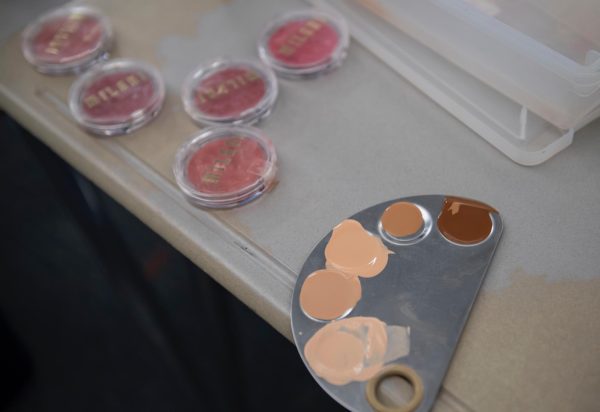
The hair and makeup crew at Central get together on Tuesdays in Mrs. Gowing’s room, number 306. They work together to create the styles for the hair and makeup of the actors. During the months leading up to the production week, these students practice the chosen looks weekly. They start with researching the backgrounds of the characters and mock ups of ideas. Here is an interview with Joliet Naroian and the process she takes part in every Tuesday.
“What is the process you undergo when planning the hair and makeup designs?”
“We usually start out by mapping out each character on a slide deck. Then we took each of those and added pictures to them, we make sure we understand what the actual character looks like while also with what our cast looks like.”
“How early in the rehearsal schedules does your team start designing the character looks and start practicing?”
“We started designing right away. And then, we’re hopefully starting to craft the physical looks about half way through.”
“If there’s any allergies, how do you guys work around them?”
“Some people this year are allergic because there’s some looks this year where we have to use latex. We make sure that all the health forms the kids filled out are turned in. Even then we will double check with the directors to make sure that everything’s good in that department. If someone has an allergic reaction, we find alternatives or stop using that one product all together.”
On stage, the makeup has to be able to be seen under the bright lights. This look calls for more products. Many of these procedures need to be practiced over and over again until the crew gets it right; it all takes practice. None of these processes are noticed by the viewers of the show, not until you learn about the full picture.
Set Crew
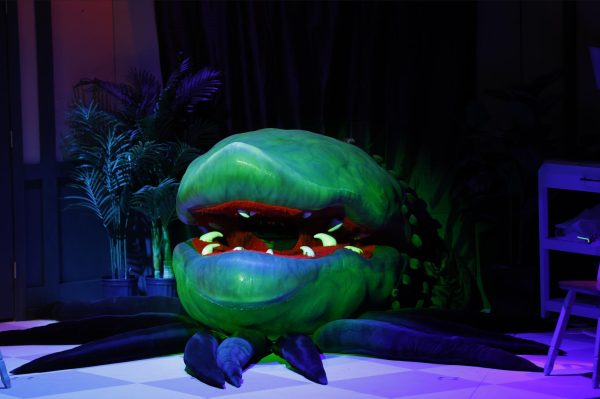
Musicals tend to feel more realistic due to factors such as setting, lighting and sound. Each of the stated categories are critically peaced together by the set and tech crew. These groups of participants have to analyze the scenes in the productions in order to build the background and choose the sound board. The sets get built by hand with great precision and hard work. A lot of the crew’s time is spent listening to the actors and reading the script to fill in gaps with sound cues. Most of the decisions are conducted by the director and leader of the production crew, Mr. Joyal. Here is Mr. Joyal discussing the process the set crew undergoes with their set creations.
“How do you make sure the elements of lighting, sound, and props work together to create that vision you first intended?”
“It’s an interesting question. I think one of the cool things about our theater is that we have capabilities probably beyond what we will ever use. The light and sound stuff that we have has really positioned us so that if we can dream something up, we can probably make it look and sound pretty close to how we envisioned it. I will say that for this one, one of the things that we tried to do is to telegraph things like good and evil using colors and certain kinds of props and certain scenes so that it’s easier for the audience to kind of follow but also like when they see red, it looks and feels evil. And so it kind of allows us to prefab a reaction from the audience based on what we know about how they perceive color.”
“How involved do the students get in designing the set?”
“As far as a lot of the decoration that has taken place this time around, most of that is student driven. So like the panels that we’ve installed on stage, those were created by a student. We spent a tremendous amount of time using spray paint, aging things, like building space junk and the trash can R2D2 was manufactured by student. Everything was pretty much designed by students.”
All Together
Each group of students in the Theater Guild meet up on different days. It isn’t till the week of the production that they all come together and combine their creations. We call this week tech week. This is where the actors run through the show while the crew changes the scenes with background changes, lighting switches like blackouts, and sound cues. The flow of the production begins to start fitting together during this week. The actors begin to get fully dressed up in the hair and makeup department starting at the beginning of this long process. During this same week period, the opening production night starts on that Thursday. After this tiring week, the students come back to school on the following Monday to participate in a “set strike”. This day is when all actors and crew alike get together to take down the entire set.
The theater makes moments magical through pinches of pixie dust added by everyone.

Eva Curtis • Dec 17, 2025 at 3:49 pm
Theater is beyond underrated. The shows never fail to make me laugh or be amazed.. The people in it are some of the most hard-working people I know and they deserve so much more credit. Thank you for highlighting them and I’m excited to see what else there is to come!
Jessica Weller • Dec 5, 2025 at 4:02 pm
I saw the show last night and it was INCREDIBLE! It was wonderful to see all of that hardwork come together. Thanks for this great behind the scenes look at the Theatre Guild.